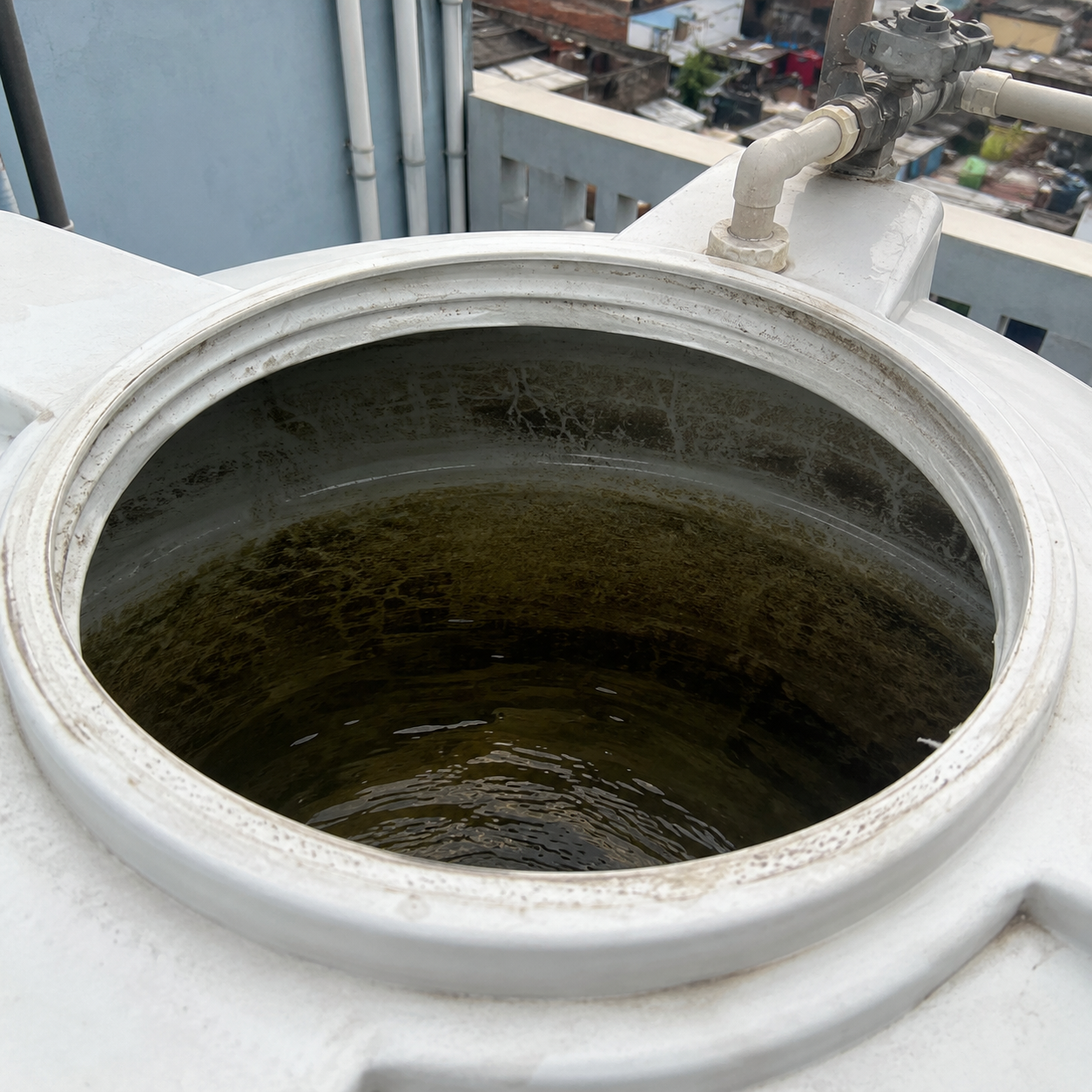
If your skin has been breaking out, itching, or drying up for no clear reason, the culprit might not be your skincare routine at all. It could be sitting on your rooftop. So, can dirty water tanks cause skin problems? In short, yes, they can, and after more than a decade working alongside cleaning teams across the UAE, I’ve seen how often a neglected tank is the hidden reason behind recurring skin trouble.
The water you bathe in touches every inch of your body. When that water passes through a tank full of sediment, bacteria, or algae, it stops being clean by the time it reaches your shower. Let’s break down exactly how this happens and what you can do about it.
Dirty water tanks can cause skin problems because contaminated water carries bacteria, fungi, sediment, and chemical residue that irritate the skin. Regular exposure to this water can trigger rashes, dryness, acne, fungal infections, and worsen existing conditions like eczema. Cleaning your tank on a regular schedule is the most reliable way to prevent these issues.
How Dirty Water Tanks Affect Your Skin
A water tank is a closed, dark, often warm space. That combination makes it a perfect breeding ground for things you don’t want anywhere near your body.
Bacterial Growth and Skin Infections
When a tank goes unwashed for months, bacteria multiply in the standing water and along the inner walls. Bathing in this water exposes your skin to microbes that can cause folliculitis, small red bumps around hair follicles, along with boils and other infections. People with cuts or sensitive skin are especially at risk.
Sediment, Hard Water, and Irritation
Over time, dust, sand, and mineral deposits settle at the bottom of the tank. In a region like the UAE, where dust is constant and water is naturally hard, this build-up is heavier than most people realise. The result is water that leaves your skin feeling tight, flaky, and itchy after every wash.
Mold, Algae, and Allergic Reactions
If sunlight reaches the tank or the lid is loose, algae and mold can take hold. These release spores and allergens into the water, which can trigger redness, itching, and allergic flare-ups, particularly in children and anyone with asthma or eczema.
Common Skin Problems Linked to Contaminated Tank Water
From what I’ve observed on countless service visits, these are the issues that show up most often when a tank is the root cause:
- Persistent acne and breakouts that don’t respond to skincare changes
- Dry, flaky patches that return no matter how much moisturiser you use
- Fungal infections such as ringworm or athlete’s foot
- Eczema and psoriasis flare-ups that worsen after bathing
- Unexplained rashes or hives across the body
- Scalp irritation and dandruff that won’t clear up
A useful clue: if the problem affects everyone in the household at the same time, the water source is a strong suspect.
Warning Signs Your Water Tank Needs Cleaning
You don’t always need a lab test to know something is wrong. Watch for these red flags:
- Water that looks cloudy, yellowish, or has floating particles
- A musty, earthy, or chlorine-heavy smell from the tap
- A slimy film inside the tank or around the lid
- Sudden skin or stomach issues across the family
- More than six months since the last cleaning
If you notice even one of these, it’s time to act.
Health Risks of Dirty Water Tanks Beyond the Skin
Skin problems are usually the first sign, but the health risks of dirty water tanks go further. Contaminated water is linked to stomach infections, diarrhoea, and in severe cases waterborne illnesses caused by bacteria like E. coli or Legionella. Children, the elderly, and anyone with a weakened immune system feel these effects fastest. Treating the tank as a one-time installation rather than something that needs upkeep is a mistake that quietly affects your whole family’s wellbeing.
How Often Should You Clean Your Water Tank?
As a general rule, residential water tanks should be cleaned and disinfected at least twice a year. In dusty, high-temperature climates, or for buildings with high water usage, every four to six months is safer. Restaurants, gyms, and shared residential buildings often need quarterly cleaning to stay compliant and safe.
A proper cleaning involves draining the tank, scrubbing the walls, removing sediment, disinfecting the surface, and flushing the system, work that’s difficult and unsafe to do thoroughly on your own.
Why Professional Water Tank Cleaning Matters
DIY cleaning rarely reaches the sediment layer or fully disinfects the interior, and climbing into a tank carries real safety risks. Trained technicians use the right tools, food-safe disinfectants, and a tested process that actually removes the buildup causing your skin trouble.
If you’re based in the UAE, reliable water tank cleaning services in Dubai make this simple, and homeowners looking for thorough water tank cleaning in Sharjah can book a complete drain, scrub, and disinfection in a single visit. Professional water tank cleaning in Dubai also gives you peace of mind that the water touching your skin every day is genuinely clean.
Conclusion
So, can dirty water tanks cause skin problems? Without a doubt. A neglected tank turns your daily shower into a source of bacteria, sediment, and allergens that irritate and damage your skin over time. The good news is that this is one of the most preventable problems out there. A consistent cleaning schedule protects not just your skin but your family’s overall health. If your skin has been acting up and nothing else explains it, look up, the answer might be in your water tank.
Book Your Water Tank Cleaning Before Skin Problems Start
Don’t wait for a rash or breakout to remind you. Protect your family with professional, hassle-free service from Frontline Cleaning Services. Schedule your water tank cleaning today and enjoy clean, safe water you can actually trust.
Frequently Asked Questions
1. Can dirty water tanks cause skin problems even if the water looks clean?
Yes. Bacteria and fine sediment are often invisible to the eye. Water can look perfectly clear while still carrying microbes and minerals that irritate your skin, which is why regular cleaning matters more than appearance alone.
2. What skin conditions are most often linked to dirty water tanks?
The most common are acne, dry and flaky skin, fungal infections like ringworm, scalp irritation, and flare-ups of eczema or psoriasis. Recurring rashes that affect the whole household are a strong warning sign.
3. How often should I clean my water tank to avoid skin issues? At least twice a year for most homes, and every four to six months in dusty or hot climates like the UAE. Shared buildings and high-usage properties may need quarterly cleaning.
4. Can I clean my water tank myself?
You can rinse it, but DIY cleaning rarely removes the sediment layer or fully disinfects the interior, and entering a tank can be dangerous. Professional water tank cleaning services in Dubai handle the full process safely and thoroughly.
5. Is dirty tank water only a risk for the skin?
No. Beyond skin problems, the health risks of dirty water tanks include stomach infections, diarrhoea, and waterborne illnesses. Children and the elderly are most vulnerable.
6. How do I know if my water tank is the cause of my skin problems?
If multiple people in your home develop skin issues at the same time, or symptoms worsen right after bathing, your water tank is a likely cause. A professional inspection and cleaning will confirm and resolve it.