By Rashid Al Hammadi | Operations Manager, Technical Cleaning | TheKleeners
I’ve had frantic calls from a villa in Arabian Ranches at 6 a.m., from a commercial tower in Downtown Dubai at noon, and from a school in Mirdif at midnight same panic in the voice, and the problem is almost always the same: contaminated water caused by a dirty tank. It never happens at a convenient time, and after years of inspecting water tanks, I’ve seen how quickly poor maintenance can turn into a serious health risk.
Dubai’s extreme heat, dust storms, and long water storage periods create the perfect conditions for bacteria, algae, and sediment to build up. That’s why knowing how to clean a dirty water tank is essential. In this guide, I’ll walk you through the warning signs, the right cleaning process, and when it’s time to call a professional.
At Frontline Cleaning Services, that’s exactly what I’ve learned to recognize in seconds. Here’s what you need to know.
Why Dirty Water Tanks Are a Silent Health Threat
Bacterial Contamination and Disease Risks
Stagnant water becomes a breeding ground for harmful bacteria within days. E. coli, Legionella, and other pathogens thrive in warm, undisturbed water exactly what your tank provides. These aren’t just minor inconveniences; they can cause severe gastroenteritis, respiratory infections, and long-term health complications.
The problem worsens in Dubai’s climate. Heat accelerates bacterial growth, while frequent power cuts mean water sits idle longer than normal. Issues with your plumbing system, such as blocked drains requiring drain line jetting services, can also cause backflow contamination directly into your stored water.
Sediment, Rust, and Infrastructure Damage
Beyond bacteria, dirty tanks accumulate sediment, rust particles, and organic matter. This buildup:
- Clogs pipes and reduces water pressure
- Damages appliances and water heaters
- Creates biofilm: a protective layer bacteria hide beneath
- Makes visible water discoloration (brown or yellow tinting)
Signs Your Water Tank Needs Cleaning Now
Don’t wait for a crisis. Watch for these warning signs:
- Visible discoloration – Brown, yellow, or cloudy water
- Strange odors – Musty or sulfur-like smells
- Reduced water pressure – Sediment blocking pipes
- Visible particles – Floating debris or sludge at the bottom
- Taste changes – Water tastes metallic or off
Cleaning frequency: Residential tanks should be cleaned every 6-12 months. Commercial properties need more frequent cleaning depending on usage and water source.
The Complete Step-by-Step Process to Clean Dirty Water in a Tank
Step 1: Safety Preparation and Inspection
Before touching anything, assess the tank’s condition. Look for cracks, corrosion, or structural damage. If your tank is elevated or large, don’t work alone. Ensure proper ventilation; tank interiors have minimal oxygen, creating suffocation risks.
Step 2: Drain Your Tank Safely
Turn off the water supply first. Open the drain valve at the tank’s lowest point to empty it completely. Don’t drain water directly into storm drains; use a pump or direct it to approved waste systems. This prevents environmental contamination.
Step 3: Scrub and Remove Sediment
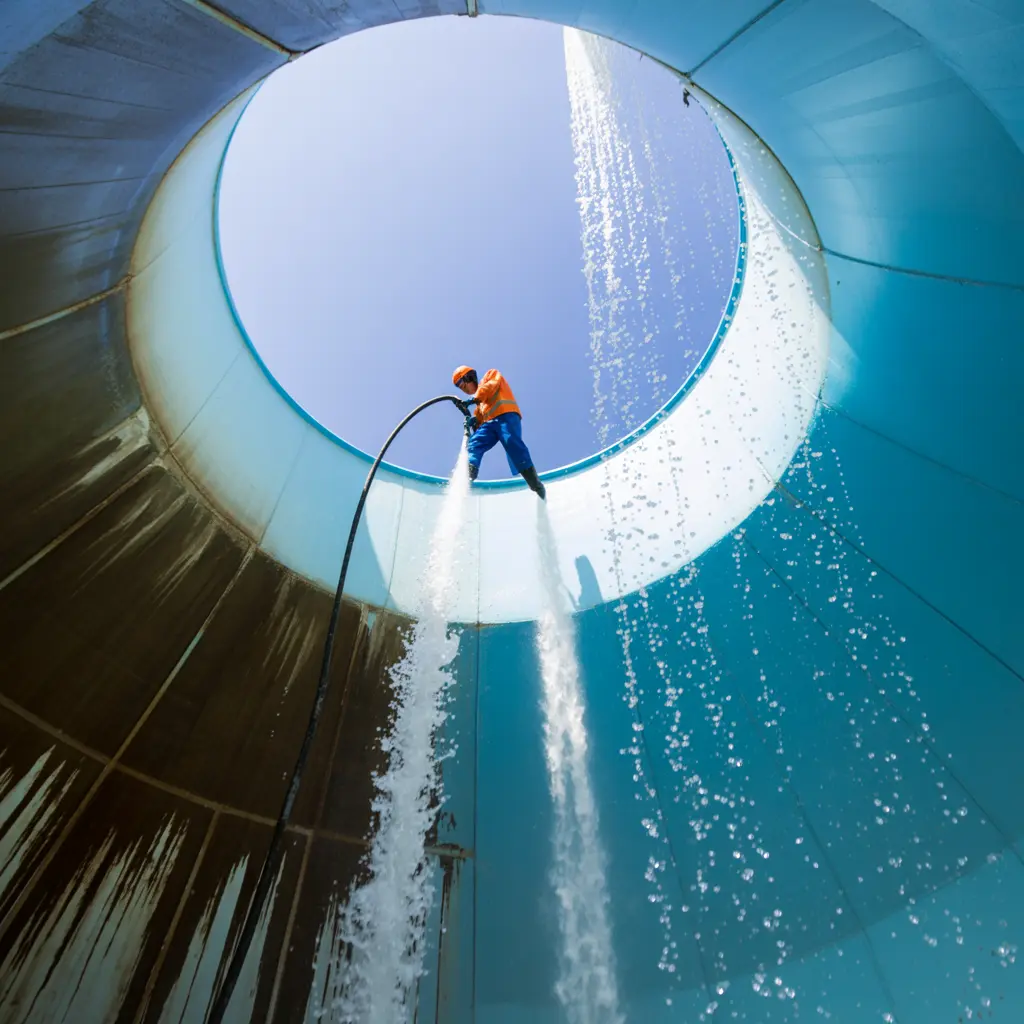
Enter the empty tank and manually scrub all interior surfaces using a long-handled brush. Start from the top and work downward. Pay special attention to corners and the bottom, where sediment accumulates thickest. For stubborn buildup, use a low-pressure water jet rather than high pressure, which can damage tank walls.
Step 4: Disinfection (Chlorination Method)
After scrubbing and rinsing thoroughly, apply a chlorine-based disinfectant. Standard practice uses 20-30 mg/L of chlorine for 2-4 hours. Open tank lids to ensure ventilation. Wear protective gear—chlorine fumes are dangerous.
Step 5: Final Rinsing and Water Quality Testing
Rinse the tank multiple times until chlorine smell disappears completely. Test water quality using a kit that measures:
- Chlorine residual levels
- pH balance
- Bacterial count
- Turbidity (cloudiness)
Step 6: Refill and System Check
Refill your tank and run water through all outlets to ensure no contamination remains in pipes. Check for leaks and confirm water pressure is normal.
Common Mistakes That Undermine Cleaning Efforts
Using wrong chemicals: Never mix bleach with other cleaners. Some people use acid-based products that corrode tank walls; stick to chlorine-based disinfectants designed for potable water.
Incomplete rinsing: Chlorine residue tastes terrible and poses health risks. Rinse until you can’t smell chlorine anymore, then rinse again.
Skipping professional inspection: Similar contamination issues can also affect septic systems. Regular septic tank maintenance helps prevent blockages, unpleasant odors, and costly repairs. Professional inspections can identify hidden issues that are often missed during DIY maintenance.
Preventing Dirty Water: Your Maintenance Blueprint
Prevention beats treatment every time.
Install inlet filters: Quality filters prevent debris from entering when water is supplied. Check and replace them every 3-6 months.
Seal your tank properly: Loose covers invite insects, dust, and contamination. Ensure lids fit snugly and have functioning locks.
Schedule regular inspections: Mark your calendar for annual tank inspections even if the water looks clean. Bacteria don’t announce themselves visually.
Maintain water circulation: Stagnant water is contaminated water. If possible, ensure regular water usage or install circulation pumps in rarely-used systems.
When to Call Professional Water Tank Cleaning Services
DIY vs. Professional: Which Is Right for You?
DIY cleaning works for small, accessible residential tanks if you’re confident with basic plumbing. However, professional cleaning becomes essential for:
- Large or elevated tanks requiring special equipment
- Commercial properties with higher contamination risks
- Tanks showing signs of structural damage
- Properties in areas with recurring water quality issues
Our professional water tank cleaning service in Dubai uses commercial-grade disinfectants, high-capacity pressure systems, and laboratory-grade water testing that ensures complete sanitization- something manual cleaning can’t match.
Conclusion: The True Cost of Neglect
A dirty water tank isn’t just an inconvenience—it’s a health hazard affecting your entire household. I’ve encountered families dealing with serious health issues traced back to contaminated tank water. The solution isn’t complicated: regular cleaning, proper maintenance, and knowing when to call professionals.
Your water tank deserves the same care you give your home. Schedule your tank inspection today and ensure every drop you consume is safe.
Frequently Asked Questions
How long does tank cleaning take?
Most residential tanks take 3-5 hours. Commercial tanks require 6-8 hours depending on size and contamination level.
Is chlorination safe for my family?
Yes, when done correctly. Chlorine dissipates within hours, leaving no harmful residue if rinsed properly. The CDC approves chlorination for potable water disinfection.
Can I clean my tank myself?
Small tanks in accessible locations, yes. Larger tanks or commercial properties should be left to professionals with proper equipment and safety training.
Why does my water still taste bad after cleaning?
Pipes may retain bacteria and biofilm. Run water from all outlets for 10-15 minutes to flush the system completely.