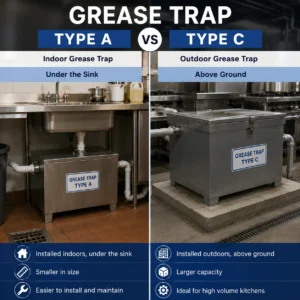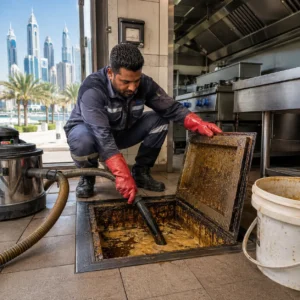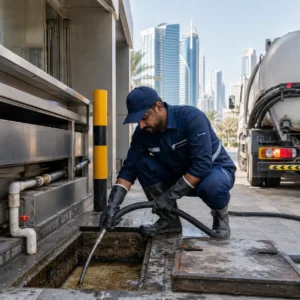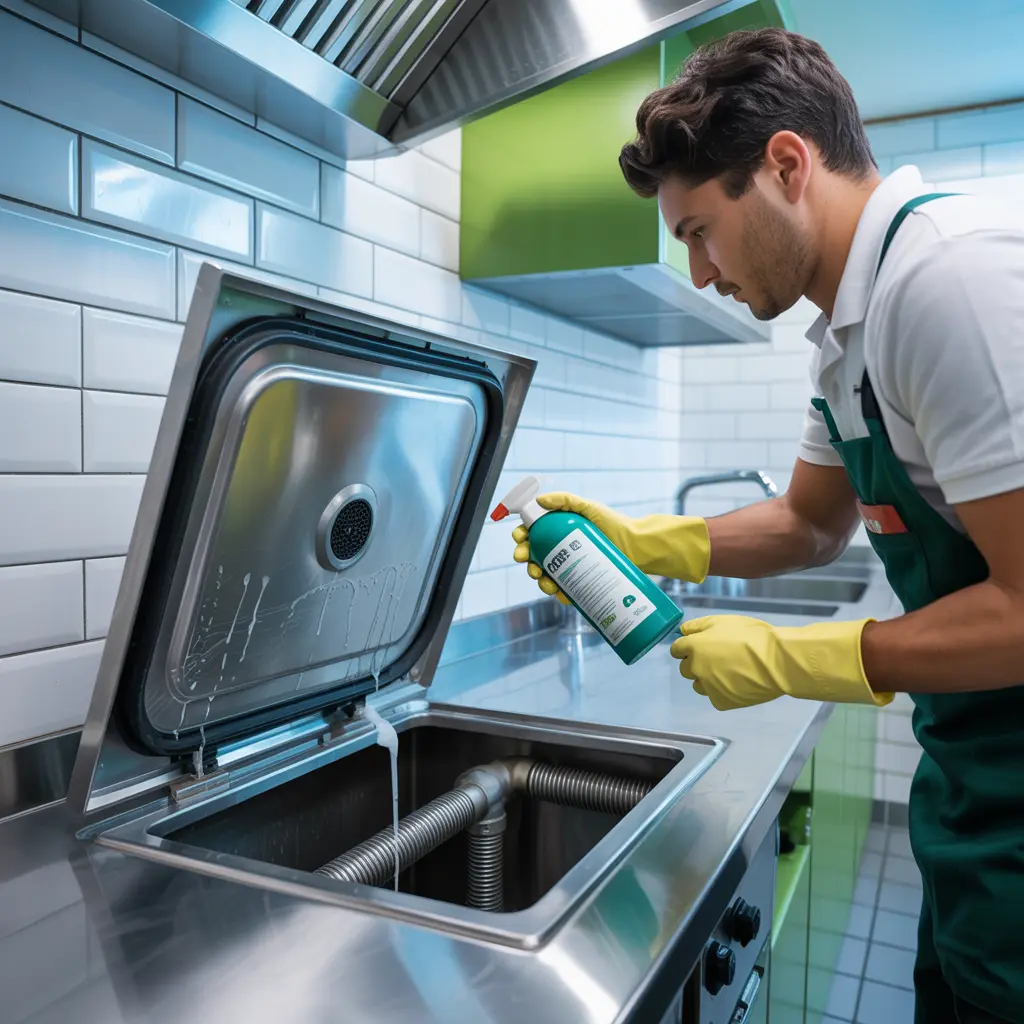
A grease trap cleaning solution can support routine maintenance, but it cannot physically remove a thick floating grease layer or settled food sludge. Knowing how to use a Grease Trap Cleaning Solution Effectively starts with choosing a product that suits the trap, following its label, and understanding what the solution can realistically achieve.
As Operations Manager for Technical Cleaning at Frontline Cleaning Services, I have inspected grease traps in restaurants, cafés, hotels, and commercial kitchens across Dubai. One mistake I regularly see is staff increasing the dose whenever odours or slow drainage return. In many cases, the problem is not weak product performance; the trap is already full and needs physical cleaning.
Quick Answer
A grease trap cleaning solution should be selected according to its ingredients, intended use, trap material, wastewater system, and manufacturer instructions. Measure the dose accurately, apply it when water flow is low, allow the stated contact time, and monitor odour and drainage afterward. Never use a maintenance product as a substitute for removing accumulated grease and solids.
Why Regular Grease Trap Cleaning Matters
A grease trap collects fats, oils, and grease (FOG) from wastewater before it enters the sewage system. Over time, these substances accumulate and create blockages, leading to:
- Slow-draining sinks.
- Unpleasant kitchen odors.
- Increased risk of plumbing damage.
- Possible violations of local health regulations.
From my experience, staying on top of a regular cleaning schedule is much better than waiting for problems to arise. While working in various kitchens across Dubai, I’ve found that using a professional-grade solution, recommended by specialists in Grease Trap Cleaning in Dubai, effectively breaks down fats and oils without any hassle.
Choosing the Right Grease Trap Cleaning Solution
Not all cleaning solutions are created equal. Here’s what I’ve learned works best:
- Biodegradable formulations: These are safe for the environment and prevent chemical buildup.
- Enzyme-based solutions: Highly effective at breaking down organic matter, fats, and oils.
- Non-corrosive formulas: Protect your pipes and plumbing system from damage.
When selecting a solution, I always read product reviews and check for certifications. This extra step ensures I’m using a trusted and authoritative product that delivers real results.
Step-by-Step Guide to Using a Grease Trap Cleaning Solution
Here’s my tried-and-true method for optimal results:
1. Prepare the grease trap
- Remove the lid carefully and wear protective gloves.
- Scoop out excess solid grease and dispose of it properly.
2. Measure the solution
- Follow the manufacturer’s instructions for dosage. Using too much or too little can affect efficiency.
3. Apply the solution
- Pour the cleaning solution directly into the trap.
- Allow the solution to work for the suggested duration, typically between 15 and 30 minutes.
4. Flush with water
- Run warm water to help the solution break down the grease and carry it through the system.
5. Repeat if necessary
- For heavily clogged traps, I sometimes repeat the process to ensure complete cleaning.
Types of Grease Trap Cleaning Solutions
Enzyme-Based Products
Enzyme formulations may contain lipase or other enzymes designed to act on fats and organic material.
They are generally promoted for routine maintenance rather than emergency blockage removal. Their performance can be affected by temperature, pH, contact time, detergent exposure, and the type of grease present.
An enzyme product should not be assumed to work on every kitchen waste stream. Heavy oils, solid fats, food sludge, and large grease layers may remain despite regular application.
Bacteria-Based Products
Biological products introduce selected microorganisms intended to digest suitable organic matter over time.
These solutions usually require stable conditions. Strong disinfectants, extreme temperatures, harsh drain chemicals, or unsuitable pH levels may reduce bacterial activity.
They are not instant cleaners. When a trap is already overloaded, bacteria cannot replace pumping or manual waste removal.
Non-Emulsifying Maintenance Products
Some commercial products are formulated to support grease management without deliberately dispersing fats into the wastewater.
When comparing options, ask the supplier whether the product emulsifies grease and request evidence supporting the answer. Avoid relying only on phrases such as “industrial strength” or “fast acting.”
Chemical Degreasers and Emulsifiers
Strong degreasers may rapidly loosen grease from surfaces. However, loosening grease is not the same as removing it from the wastewater system.
Some wastewater programmes prohibit or restrict acids, caustics, solvents, emulsifiers, and other grease-cutting additives because they may move fats beyond the trap.
These products should not be selected without checking local requirements, manufacturer instructions, pipe compatibility, and worker-safety controls.
Odour-Control Products
Deodorisers may reduce unpleasant smells without addressing the underlying grease or sludge level.
They can be useful only after the cause of the odour has been investigated. A returning smell may indicate:
- A full trap
- Settled food waste
- A damaged lid seal
- A loose baffle
- Contaminated pipework
- Waste around the trap
- Poor ventilation
Fragrance should not be used as proof that the trap is clean.
Best Practices for Long-Term Maintenance
Based on my experience, consistent care prevents major issues:
- Schedule weekly or bi-weekly cleaning depending on kitchen usage.
- Avoid pouring cooking oils down the drain; always collect them separately.
- Combine manual cleaning with a chemical solution for maximum efficiency.
- Keep a cleaning log to track maintenance and avoid forgotten tasks.
These simple practices save time, reduce unpleasant odors, and extend the life of your grease trap.
Tips for Safety and Effectiveness
- Always wear gloves and protective eyewear.
- Ensure proper ventilation in the kitchen.
- Never mix different chemical solutions; this can create hazardous reactions.
- Store cleaning solutions in a cool, dry place, away from children and pets.
Conclusion
Using a grease trap cleaning solution correctly helps reduce grease buildup, control unpleasant odors, and improve the efficiency of your grease trap. Regular maintenance combined with professional cleaning ensures your system operates smoothly, prevents costly blockages, and extends the lifespan of your grease trap. Following the right cleaning routine will keep your kitchen hygienic and compliant with local regulations.
Frequently Asked Questions
1. What is the best grease trap cleaning solution?
The best grease trap cleaning solution is one that effectively breaks down grease, fats, and oils without damaging the trap or plumbing. Enzyme-based and biodegradable solutions are commonly recommended for regular maintenance.
2. How often should I use a grease trap cleaning solution?
For commercial kitchens, a grease trap cleaning solution should be used regularly between professional cleanings, typically once or twice a week, depending on kitchen usage and grease buildup.
3. Can I use chemicals to clean a grease trap?
Harsh chemicals are not recommended because they can damage plumbing and interfere with grease trap performance. Use a grease trap cleaning solution specifically designed for grease removal.
4. How do you use a grease trap cleaning solution effectively?
Remove excess grease and waste, apply the recommended amount of cleaning solution according to the manufacturer’s instructions, and allow it to work before rinsing thoroughly. Regular maintenance improves results.
5. Does a grease trap cleaning solution remove bad odors?
Yes. A quality grease trap cleaning solution helps break down organic waste and grease, reducing unpleasant odors while keeping the trap functioning efficiently.
6. Can a grease trap cleaning solution replace professional cleaning?
No. A grease trap cleaning solution helps maintain the system between cleanings, but professional grease trap cleaning is still necessary to remove heavy grease buildup and ensure compliance with local regulations.