The AC drain line plays a silent but critical role in removing condensation from your system. Without regular maintenance, the line can become blocked, causing water leaks, mold growth, and costly repairs. Whether you’re a first-time homeowner or a seasoned DIY enthusiast, this guide will walk you through how to clean your AC drain line safely and effectively, drawing on common best practices followed by Frontline Cleaning Services professionals to reduce clogs and leaks.
Why Cleaning Your AC Drain Line Matters
When your AC runs, moisture collects inside the evaporator coil. That water flows through a drain line to be safely disposed of. Over time, dirt, dust, algae, and debris can build up, resulting in an AC drain line clogging. Left unchecked, this causes:
- Water leaks near indoor units
- Musty smells or mold growth
- Reduced cooling efficiency
- Damage to ceilings or floors
Cleaning the line regularly helps prevent clogs and leaks and extends the life of your system.
Tools You’ll Need
Before you begin, gather a few essentials:
- AC drain line cleaner (biodegradable foam is ideal)
- Wet/dry shop vacuum
- Funnel or soft tubing
- Protective gloves and eye protection
- Towels or a small bucket
Step-by-Step AC Drain Line Cleaning
1. Turn Off the System
Safety first. Switch off your AC at the thermostat and the breaker box to prevent damage or injury.
2. Locate the Access Point
Most units have a removable panel near the indoor evaporator. You’ll see a PVC pipe; that’s your drain line.
3. Inspect for Blockages
Look inside with a flashlight. If you see algae or sludge, it’s time to act.
4. Apply AC Drain Line Cleaner
Use a specially designed HVAC drain line cleaner; these products break down buildup without harming pipes. Regular care, including AC duct cleaning in Dubai, keeps your AC running smoothly all year round.
How to use:
- Pour 1 cup of cleaner into the drain opening.
- Wait 10 to 15 minutes to let it work.
- Follow with a slow flush of clean water.
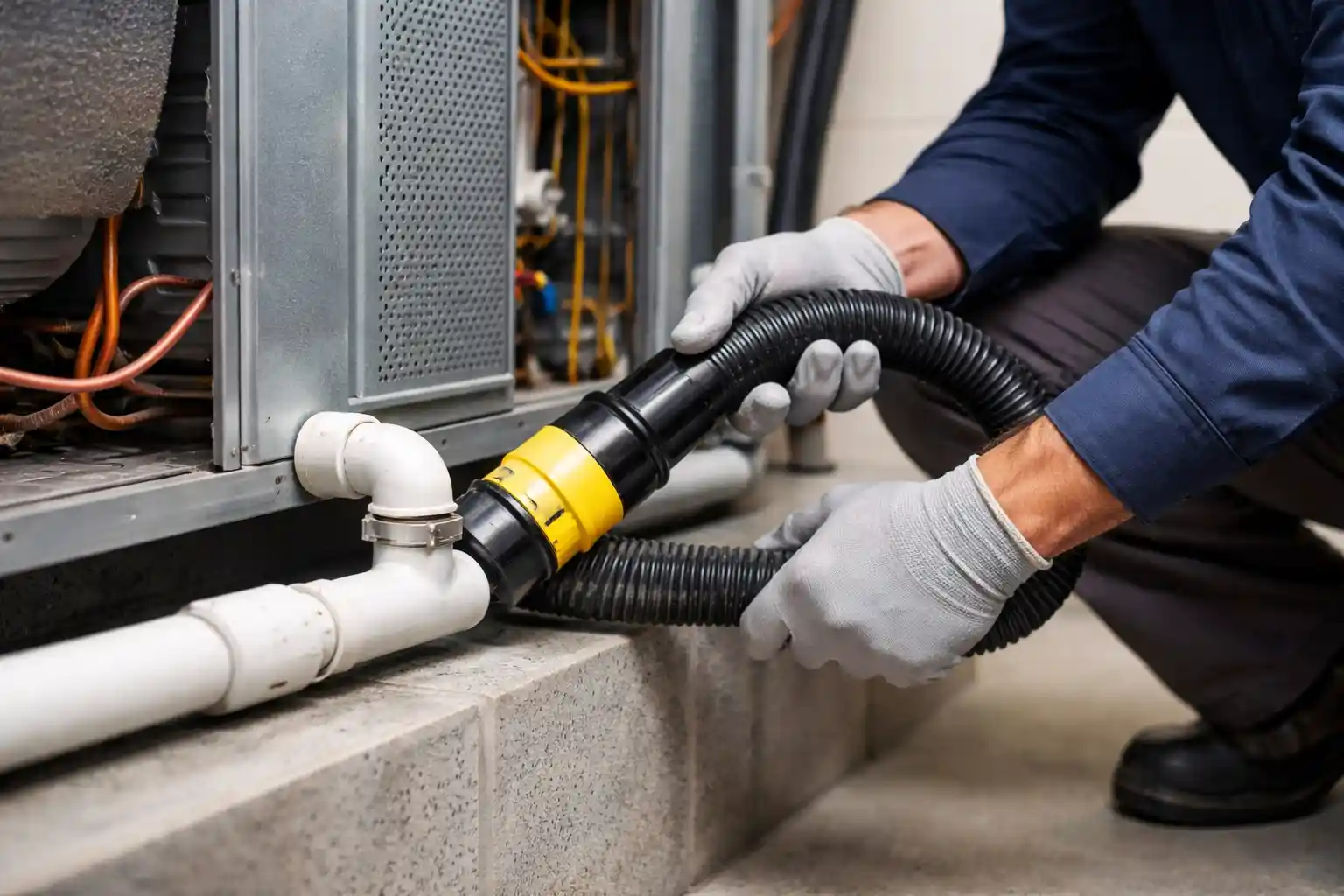
5. Unclog with a Wet/Dry Vacuum
If the line is still slow:
- Attach a wet/dry vacuum to the exterior drain outlet.
- Seal it with a rag or duct tape.
- Run the vacuum for 1 to 2 minutes to pull debris out.
6. Test It Out
Turn your AC back on and watch for a steady water flow in the drain pan. If it drains slowly or overflows, contact a professional.
Preventive Tips to Avoid Future Clogs
- Add monthly vinegar flushes during peak season.
- Install a float switch to alert you of backups.
- Schedule bi-annual HVAC inspections.
- Keep the area around the indoor unit clean and dry.
When to Get Professional Help
DIY cleaning works for most clogs, but it’s important to call a certified HVAC technician, like those at The Kleeners, when:
- You notice persistent water leaks.
- Your drain line backs up repeatedly.
- You smell strong mold or mildew.
- You’re uncomfortable handling tools or electrical components.
The Kleeners understand system pressures and have the expertise to safely address issues, prevent damage, and keep your HVAC system running efficiently.
Conclusion
Cleaning your drain line is one of the easiest and most effective steps you can take to protect your AC system. With the right AC drain line cleaner, basic tools, and a little time, you can prevent costly clogs and leaks. Knowing how often to clean AC ducts is an important part of regular maintenance. Regular maintenance equals a longer-lasting, more reliable cooling system and greater peace of mind.
Frequently Asked Questions
Q: What liquids can I use to flush my AC drain pipe?
A: You can use a specially designed HVAC drain line cleaner or a mild vinegar solution to safely clear buildup.
Q: How can I unclog my AC drain tube at home?
A: Gently flush the drain with water or a safe AC drain line cleaner and use a wet/dry vacuum for stubborn clogs.
Q: Is it safe to use bleach or vinegar in the AC drain pipe?
A: Mild vinegar is safe for routine cleaning, but avoid bleach, as it can damage PVC pipes over time.