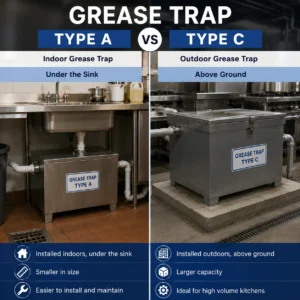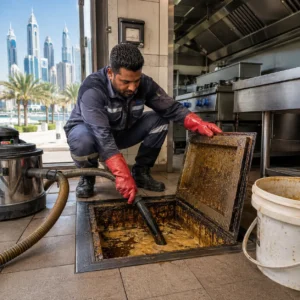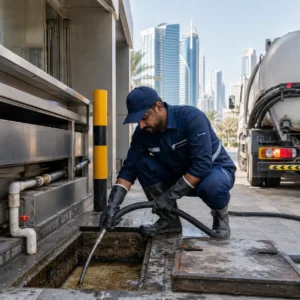
A grease trap works quietly beneath a commercial kitchen, collecting fats, oils, grease, and food solids before they reach the main drainage system. When it becomes overloaded, the first warning may be a slow sink, but the next can be a strong odour or wastewater backup during a busy service.
As Operations Manager for Technical Cleaning at Frontline Cleaning Services, I have supervised grease trap work in restaurants, cafés, hotels, and commercial kitchens across Dubai. One mistake I regularly see is kitchen teams adding cleaning products without physically removing the thick grease layer and settled waste. The trap may smell better briefly, but it remains full.
This guide explains how to carry out a complete grease trap clean-out safely, which parts must be inspected, and when professional support is the more responsible choice.
Quick Answer
A complete grease trap clean-out involves opening the unit safely, removing floating grease and settled food solids, cleaning the internal walls and baffles, inspecting seals and connections, restoring the correct water level, and disposing of the waste responsibly. Cleaning solutions may support maintenance, but they cannot replace the physical removal of accumulated grease and sludge.
Step-by-Step Guide to a Safe Grease Trap Cleanout
Cleaning a grease trap may seem daunting, but following these steps ensures safety and efficiency.
Tools and materials you’ll need
- Protective gloves and goggles
- Scraper or spatula
- A bucket or a container for waste
- Grease trap cleaning solution (biodegradable solutions are recommended)
- Cleaning brush
How to clean a grease trap effectively
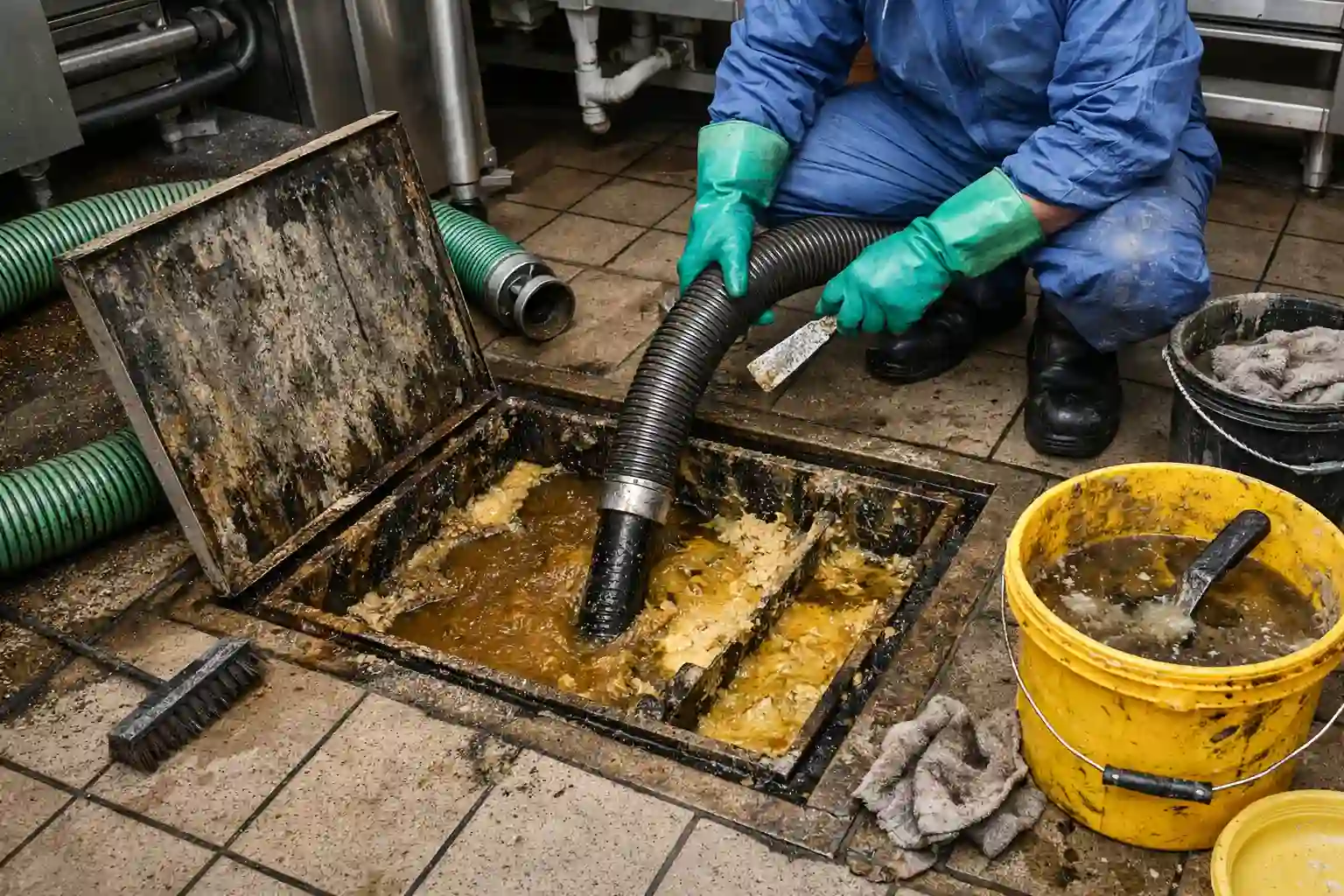
- Turn off the water, remove the cover, and scoop out the grease.
- Apply the grease trap cleaning solution.
- Scrub walls and rinse with hot water.
- Reassemble the trap and dispose of waste properly.
Pro tip: Always check for signs of wear or damage while cleaning, as these can reduce efficiency and cause leaks.
Safety and Compliance
Grease trap cleaning regulations to follow
- Municipalities have strict rules for grease disposal and trap maintenance.
- Following local laws prevents fines and supports environmental safety.
- Keep cleaning records, especially in large kitchens, to show compliance.
Protective gear and safety precautions
- Wear gloves, goggles, and long sleeves to protect from burns and skin contact.
- Avoid inhaling cleaning fumes.
- Never pour grease directly into drains.
Common Mistakes and How to Avoid Them
Even experienced staff can make errors during grease trap cleaning. Some common mistakes include:
- Skipping regular cleaning leads to clogs and odor buildup.
- Using harsh chemicals that damage the trap or harm the environment.
- Improper disposal of waste can violate regulations.
Tips to avoid mistakes:
- Stick to a cleaning schedule based on trap size and kitchen usage.
- Eco-friendly cleaning solutions make grease trap cleaning in Dubai safer, more efficient, and compliant with local regulations.
- Train staff on proper cleaning and safety protocols.
Maintenance Tips for Long-Term Efficiency
Regular maintenance extends the life of your grease trap and keeps your kitchen running smoothly. Consider:
- Cleaning traps weekly for high-volume kitchens.
- Inspect for signs of wear or blockages during each cleaning.
- Keeping a log of cleanings to track performance and compliance.
Consistency is key. A well-maintained grease trap reduces plumbing emergencies, prevents unpleasant odors, and ensures compliance with regulations.
Conclusion
A safe and effective grease trap cleanout combines proper technique, the right cleaning solutions, and strict adherence to safety and regulatory standards. By following these steps and implementing a consistent maintenance routine and making sure to use a grease trap cleaning solution, you protect your kitchen, maintain efficiency, and demonstrate professional responsibility. Clean grease traps aren’t just about hygiene; they’re about long-term operational success.
Professional Grease Trap Cleaning with Frontline
- Trusted Experts: Certified technicians with commercial kitchen experience.
- Safe & Compliant: Follows local grease trap cleaning regulations.
- Effective Solutions: Uses high-quality cleaning products for thorough results.
- Saves Time & Cost: Prevents plumbing issues and reduces staff workload.
- Compliance Records: Provides documentation of each cleaning for peace of mind.
Frequently Asked Questions
1. How often should a grease trap be cleaned?
Grease traps should be cleaned regularly, typically every 1 to 3 months, depending on kitchen usage.
2. Can I clean a grease trap myself?
Yes, but always follow safety precautions, use proper tools, and comply with local regulations.
3. What happens if a grease trap is not cleaned?
Neglecting a grease trap can cause clogs, foul odors, and potential fines for non-compliance.