A homeowner once noticed a persistent smell near the drainage area but assumed it would disappear on its own. A few days later, wastewater began draining slowly, and the problem became much more expensive to fix. This is why professional frontline cleaning services and timely GRP septic tank maintenance can make a major difference.
Quick Answer: GRP septic tank cleaning removes sludge, grease, wastewater, and solid waste from a glass-reinforced plastic tank. Cleaning frequency depends on tank size, usage, waste volume, and system condition. A professional service usually includes inspection, pumping, sludge removal, internal washing, damage checks, and safe waste disposal.
What Is a GRP Septic Tank?
A GRP septic tank is a wastewater storage and treatment tank made from glass-reinforced plastic, also known as fibreglass-reinforced plastic. For properties requiring septic tank cleaning in Dubai, GRP tanks are a common choice because they are lightweight, corrosion-resistant, and durable.
GRP is commonly used because it is:
- Lightweight compared with concrete
- Resistant to corrosion
- Relatively easy to install
- Suitable for underground applications
- Resistant to many chemicals found in wastewater
- Less likely to crack from rust-related deterioration
Inside the tank, wastewater naturally separates into different layers.
Scum Layer
Oil, grease, soap residue, and lighter materials rise to the top.
Liquid Layer
Partially treated wastewater remains in the middle section.
Sludge Layer
Heavy solids settle at the bottom of the tank.
Over time, the sludge and scum layers become thicker. When they are not removed, they reduce the tank’s usable capacity and may interfere with the outlet, drainage field, or connected wastewater system.
How Does a GRP Septic Tank Work?
Wastewater from toilets, sinks, showers, kitchens, and other approved plumbing fixtures enters the tank through an inlet pipe.
The tank then performs three basic functions:
- It holds wastewater long enough for solids to settle.
- It separates grease and floating waste from heavier material.
- It allows partially treated liquid to move toward the outlet system.
Naturally occurring bacteria begin breaking down some organic waste inside the tank. However, bacteria cannot eliminate all solids.
Non-biodegradable items, heavy sludge, grease, sand, and other materials remain inside the tank and must eventually be removed through professional pumping and cleaning.
This is why septic additives cannot replace physical sludge removal.
Types of GRP Septic Tank Cleaning
Not every tank requires the same level of service. The correct cleaning method depends on the tank condition and the amount of accumulated waste.
1. Routine Septic Tank Pumping
Routine pumping removes liquid waste, sludge, and floating scum using a vacuum tanker.
It is suitable when:
- The tank is operating normally
- No severe blockage is present
- Cleaning is being performed as scheduled
- The sludge level has not caused system damage
2. Complete Internal Cleaning
Complete cleaning includes pumping followed by washing the internal walls, floor, chambers, and accessible components.
It may be needed when:
- Thick sludge is attached to the tank floor
- Grease has hardened on internal surfaces
- The tank has not been cleaned for a long time
- A full inspection is required
- The property is changing ownership or use
3. Emergency Overflow Cleaning
Emergency cleaning is carried out when the tank is overflowing, drains are backing up, or wastewater is escaping near the tank.
This service may include:
- Immediate pumping
- Blockage assessment
- Inlet and outlet inspection
- Cleaning of affected areas
- Identification of the overflow cause
Emergency pumping may solve the immediate problem, but further inspection is often required to prevent it from returning.
4. Commercial GRP Tank Cleaning
Commercial properties usually generate larger and more variable wastewater volumes than homes.
Restaurants, labour accommodations, warehouses, workshops, schools, and industrial facilities may require:
- More frequent inspections
- Larger vacuum tankers
- Grease and sludge removal
- Scheduled maintenance contracts
- Waste documentation
- Cleaning during low-activity hours
GRP Septic Tank Cleaning Process
A proper cleaning service normally follows several controlled steps.
Step 1: Site Assessment
The cleaning team identifies:
- Tank location
- Access point
- Tank size
- Waste level
- Vehicle access
- Nearby drainage risks
- Possible safety hazards
The technician may also ask when the tank was last cleaned and whether the property has experienced odours, slow drainage, or overflow.
Step 2: Opening the Tank Safely
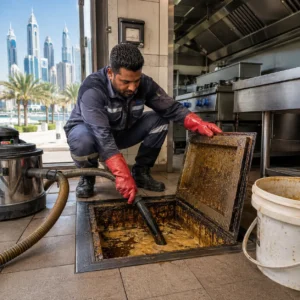
The access cover is opened carefully.
Septic tanks can contain hazardous gases, including methane and hydrogen sulphide. For this reason, the area should be controlled, ventilated where appropriate, and handled only by trained personnel.
No person should enter a septic tank without specialised confined-space procedures, monitoring equipment, protective gear, and a properly trained rescue team.
Step 3: Pumping Liquid Waste
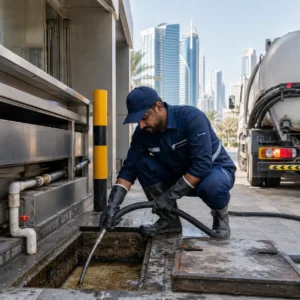
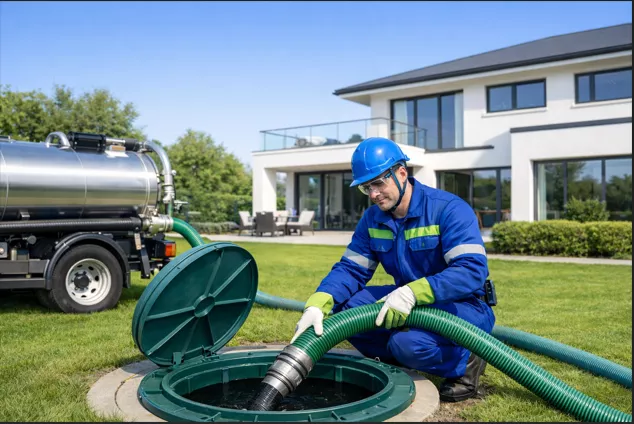
A vacuum hose removes the liquid wastewater from the tank.
The technician normally pumps from different depths to remove both floating waste and settled sludge.
Step 4: Removing Sludge and Scum
Dense sludge at the bottom may require agitation or controlled water movement before it can be vacuumed.
The top scum layer is also removed to restore the tank’s working capacity.
Step 5: Internal Washing
Where required, the walls and tank floor are washed to loosen grease, residue, and hardened deposits.
The wash water is then removed by vacuum equipment rather than being released into the surrounding ground.
Step 6: Tank Inspection
Once the tank is sufficiently empty, the technician checks accessible areas for:
- Cracks
- Leaks
- Deformation
- Damaged baffles
- Loose connections
- Inlet obstruction
- Outlet obstruction
- Broken seals
- Cover damage
- Signs of groundwater entry
Step 7: Waste Transportation
The collected wastewater and sludge must be transported to an authorised disposal or treatment facility.
It should never be dumped into open land, storm drains, roads, or unauthorised drainage systems.
Step 8: Closing and Reporting
The tank cover is secured after cleaning.
A reliable service provider should explain:
- What was removed
- Whether damage was found
- Whether the tank was unusually full
- When the next inspection may be needed
- Whether repairs or drain cleaning are recommended
Benefits of Professional GRP Septic Tank Cleaning
Pros
- Restores usable tank capacity
- Reduces the risk of overflow
- Helps prevent sewage backup
- Supports better drainage performance
- Allows inspection of tank components
- Removes sludge that bacteria cannot break down
- Provides controlled waste transportation
- Reduces exposure to dangerous gases and contaminants
- Helps identify developing problems early
Possible Limitations
- The service requires vehicle and hose access.
- Costs may increase for difficult locations.
- Emergency appointments may cost more.
- Cleaning cannot repair a damaged tank.
- A blocked drainage field may require separate work.
- Very heavy sludge may require additional washing.
Professional cleaning is preventive maintenance, not a universal repair. If the tank has structural damage, pipe failure, or drainage-field problems, additional services may be necessary.
Features to Look for in a GRP Septic Tank Cleaning Service
A good provider should offer more than basic wastewater removal.
Look for the following service features:
Proper Vacuum Equipment
The tanker and pumping equipment should be suitable for the tank size and waste consistency.
GRP Tank Experience
GRP tanks can be damaged by careless handling, inappropriate tools, excessive impact, or incorrect pressure washing.
The cleaning team should understand the material and avoid damaging internal surfaces.
Inspection Before and After Cleaning
The provider should assess the waste level before pumping and inspect visible components after cleaning.
Safe Waste Disposal
Ask where the collected waste will be transported and whether disposal follows local requirements.
Clear Pricing
The quotation should explain whether the price includes:
- Pumping
- Transport
- Disposal
- Internal washing
- Extra tanker loads
- Emergency call-out
- Long hose requirements
- Access difficulties
Emergency Availability
Properties with high wastewater usage may benefit from a provider that offers urgent overflow support.
Service Documentation
Commercial facilities may require cleaning reports, invoices, disposal records, photographs, or maintenance logs.
GRP Septic Tank Cleaning Pricing Factors
The cost of cleaning a GRP septic tank is not based on one fixed number. Several practical factors affect the final quotation.
| Pricing factor | How it affects the cost |
| Tank capacity | Larger tanks contain more waste and may require more pumping time |
| Waste volume | A nearly full tank may require greater tanker capacity |
| Sludge thickness | Dense or hardened sludge may require agitation and washing |
| Site access | Long hose distances or restricted vehicle access may increase labour |
| Number of chambers | Multi-chamber tanks take longer to clean |
| Emergency timing | Urgent, night, weekend, or holiday work may cost more |
| Waste type | Grease-heavy or commercial waste may need additional handling |
| Internal washing | Pressure washing adds equipment and operating time |
| Disposal distance | Longer transport to an authorised facility may affect pricing |
| Extra services | Pipe cleaning, blockage removal, repairs, or deodorising may be separate |
Signs Your GRP Septic Tank Needs Cleaning
Watch for the following warning signs:
- Toilets flushing slowly
- Gurgling sounds in drains
- Wastewater backing up
- Strong sewage odours
- Wet ground around the tank
- Unusually green vegetation near the system
- Wastewater visible near the cover
- Frequent drain blockages
- Septic alarms activating
- The tank reaching its planned service interval
These signs do not always mean the tank is full. They may also indicate pipe blockages, pump failure, inlet damage, outlet obstruction, or drainage-field problems.
A professional assessment is therefore more reliable than assuming pumping will solve every issue.
GRP Septic Tank Maintenance Tips
Cleaning frequency can often be managed more effectively through good daily practices.
- Repair leaking toilets and taps.
- Avoid flushing wipes and sanitary waste.
- Keep cooking grease out of drains.
- Spread heavy laundry use across different days.
- Do not drive or place heavy equipment over the tank.
- Keep the access cover visible and secure.
- Avoid planting deep-rooted trees near the system.
- Record pumping and inspection dates.
- Investigate repeated blockages instead of repeatedly using chemicals.
- Arrange inspection after unusual flooding or ground movement.
These actions do not eliminate the need for cleaning, but they may reduce unnecessary strain on the system.
Final Recommendation
Regular GRP septic tank cleaning helps prevent sludge buildup, drainage blockages, overflows, and costly system damage. Schedule inspections before problems appear, keep maintenance records, and choose an experienced provider that uses proper vacuum equipment, checks the tank after pumping, and disposes of wastewater safely. Rather than choosing the lowest price, compare the full service scope to protect the septic tank, drainage system, property, and surrounding environment.
Frequently Asked Questions
What does GRP mean in a septic tank?
GRP means glass-reinforced plastic. It is a composite material made using plastic resin reinforced with glass fibres. It is widely used for tanks because it is lightweight, corrosion-resistant, and durable when correctly installed and maintained.
How do I know when my GRP septic tank is full?
Common signs include slow drains, unpleasant smells, gurgling plumbing, wastewater backup, wet ground, and overflow near the tank. However, an inspection or sludge-level check provides a more accurate answer.
Is pumping the same as cleaning?
Not always. Pumping removes liquid and removable waste, while complete cleaning may also include sludge agitation, scum removal, internal washing, and inspection.
Can septic tank additives replace professional cleaning?
No. Additives cannot remove accumulated sludge, grease, sand, wipes, and non-biodegradable material from the tank.
Can pressure washing damage a GRP septic tank?
Incorrect equipment, excessive pressure, or careless handling can damage surfaces, fittings, seals, or internal components. Washing should be performed by a team familiar with GRP tanks.
Why does my septic tank smell after cleaning?
Temporary odours may remain around the access area, but persistent smells could indicate an unsecured cover, pipe issue, ventilation problem, leak, incomplete cleaning, or wastewater spill.
What happens if a septic tank is never cleaned?
Sludge may reach the outlet, reduce treatment capacity, block pipes, damage the drainage system, cause wastewater backup, or lead to overflow.
Should a septic tank be completely empty after cleaning?
Most waste and sludge should be removed during cleaning. The exact process may vary according to the tank design and service method. A small amount of residual liquid does not necessarily indicate poor cleaning.
Is GRP better than concrete for septic tanks?
GRP is lighter, corrosion-resistant, and easier to transport. Concrete is heavier and may be preferred in certain ground conditions. The better option depends on installation quality, soil conditions, capacity, structural requirements, and local regulations.
Can rainwater enter a GRP septic tank?
Rainwater may enter through damaged covers, faulty seals, poor surface drainage, leaking joints, or incorrect connections. Unusual filling after rainfall should be investigated.
How long does GRP septic tank cleaning take?
The duration depends on tank size, sludge thickness, access, number of chambers, equipment, and whether washing or blockage removal is required. Routine pumping is generally faster than a complete cleaning service.