Keeping a commercial kitchen comfortable and safe depends heavily on a well-functioning exhaust system. Over the years, we’ve inspected many kitchen ventilation systems where reduced airflow started as a minor issue but gradually affected smoke removal, heat control, and overall kitchen efficiency. Recognizing the early signs can help prevent larger problems and keep daily operations running smoothly.
In this guide, we’ll explain why a kitchen exhaust fan weak suction problem happens, what warning signs to look for, and how the right maintenance, including professional support from Frontline Cleaning Services, can restore proper airflow and improve the performance of your kitchen exhaust system.
Signs Your Kitchen Exhaust Fan Is Losing Suction
A weak exhaust system often gives clear warning signs before it stops working effectively.
Common signs include:
- Smoke lingers while cooking.
- Heat builds up inside the kitchen.
- Cooking odors spread into dining or prep areas.
- The fan seems louder but removes less air.
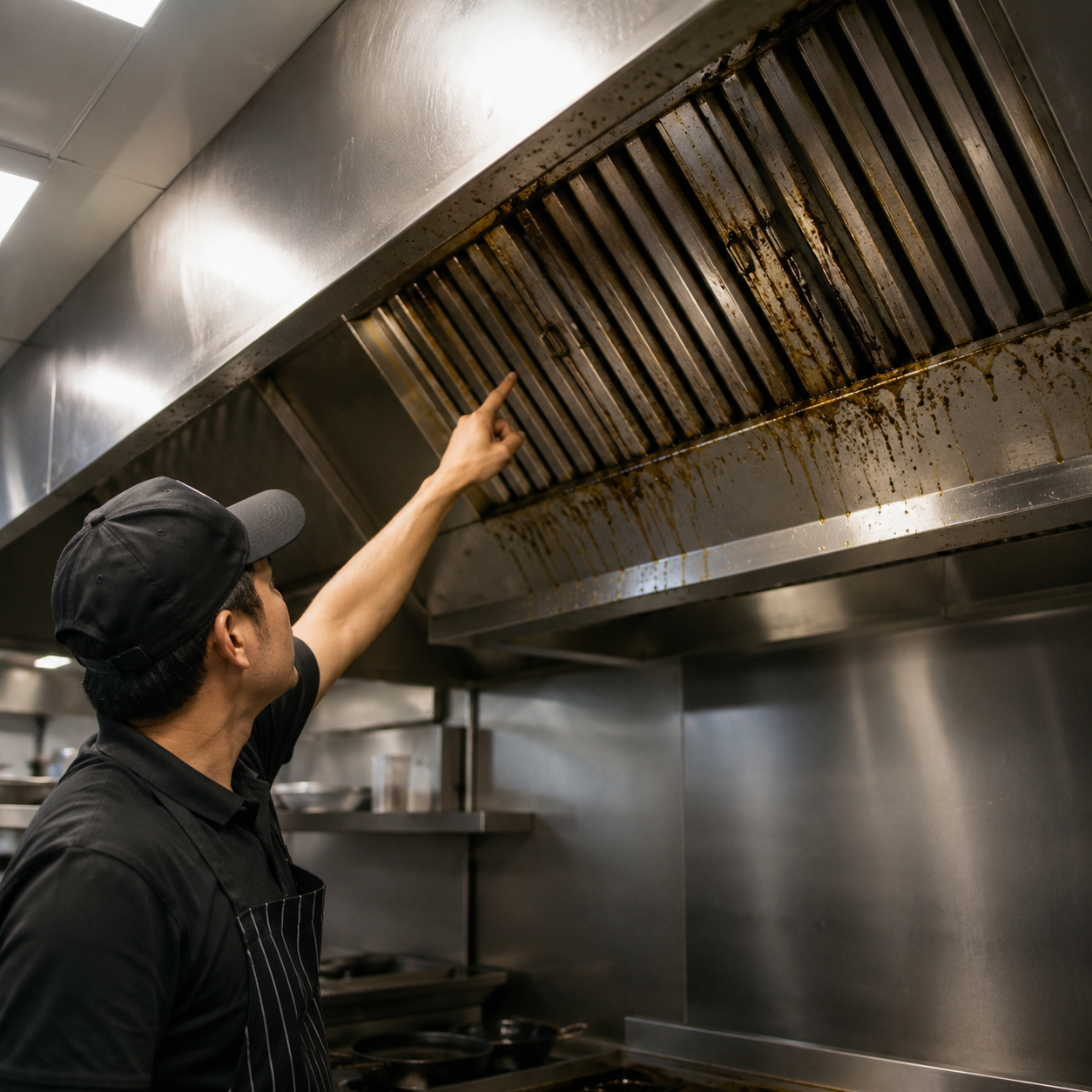
- Kitchen hood dripping grease becomes more noticeable.
- Grease collects quickly on nearby walls, ceilings, or equipment.
If you’re noticing several of these problems together, your exhaust system likely needs attention.
What Causes Weak Exhaust Suction?
Several issues can reduce airflow, but grease buildup is the most common culprit.
Grease Blocking the Ductwork
Over time, grease sticks to the inside of exhaust ducts. As the layer thickens, the space available for airflow becomes smaller, making it harder for the system to remove smoke and heat.
Professional Kitchen exhaust duct cleaning removes these deposits and helps restore normal airflow.
Dirty Fan Blades
Fan blades coated with grease cannot move air efficiently. Instead of pulling smoke out of the kitchen, the fan has to work harder while delivering less performance.
Blocked Hood Filters
Filters are designed to trap grease before it enters the duct system. When they become clogged, airflow drops significantly, forcing the entire exhaust system to work less efficiently.
Poor Maintenance
Skipping routine cleaning allows grease to build up throughout the system. Even a powerful exhaust fan cannot overcome heavy grease accumulation inside ducts and fans.
Why Weak Suction Shouldn’t Be Ignored
Poor ventilation affects more than kitchen comfort.
A weak exhaust system can lead to:
- Higher kitchen temperatures.
- Reduced staff comfort and productivity.
- Smoke remaining inside the workspace.
- Faster grease accumulation on equipment.
- Increased fire risk due to grease buildup.
- Greater strain on the exhaust fan, potentially shortening its lifespan.
Addressing the problem early is usually more cost-effective than waiting for the system to perform poorly or require repairs.
How Professional Cleaning Restores Airflow
In many cases, replacing the fan isn’t necessary. A professional cleaning removes the grease restricting airflow throughout the system.
A complete Kitchen Exhaust Cleaning in Dubai typically includes:
- Cleaning hood filters.
- Degreasing fan blades.
- Removing grease from duct interiors.
- Cleaning the exhaust hood.
- Inspecting the system for airflow restrictions.
Once grease is removed, the fan can move air more effectively, helping reduce smoke, heat, and odors.
How to Prevent Weak Exhaust Suction
Routine maintenance is the best way to keep your kitchen ventilation system performing efficiently.
Good practices include:
- Clean hood filters regularly.
- Schedule professional exhaust cleaning based on cooking volume.
- Inspect fans and ducts for grease buildup.
- Watch for changes in airflow or unusual fan noise.
- Address small ventilation issues before they become larger problems.
Preventive maintenance helps improve airflow while reducing fire risks associated with grease accumulation.
Conclusion
A kitchen exhaust fan weak suction problem is usually a sign that grease has built up inside the hood, fan, or ductwork. Ignoring it can lead to poor ventilation, uncomfortable working conditions, and increased fire risks.
Frequently Asked Questions
Can dirty ducts really reduce exhaust suction?
Yes. Heavy grease buildup narrows the duct interior, restricting airflow and making it harder for the fan to remove smoke and heat.
Does a weak exhaust fan always need replacement?
Not necessarily. In many cases, cleaning the fan, hood, and ductwork restores normal performance without replacing the equipment.
How often should kitchen exhaust systems be cleaned?
The ideal schedule depends on how often the kitchen operates and the type of cooking performed. Busy commercial kitchens usually require more frequent cleaning than lighter-use facilities.
Why is grease dripping from my kitchen hood?
Grease dripping from the hood often indicates excessive grease accumulation inside the hood or duct system. It is a strong sign that professional cleaning is overdue.
Can weak suction increase fire risk?
Yes. Grease buildup restricts airflow and creates a combustible layer inside the exhaust system, increasing the potential for grease fires if not cleaned regularly.