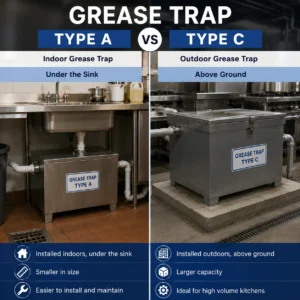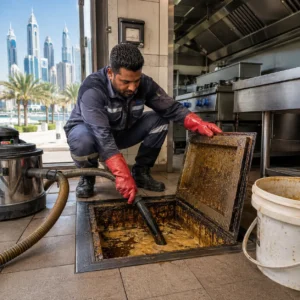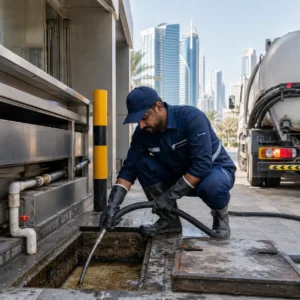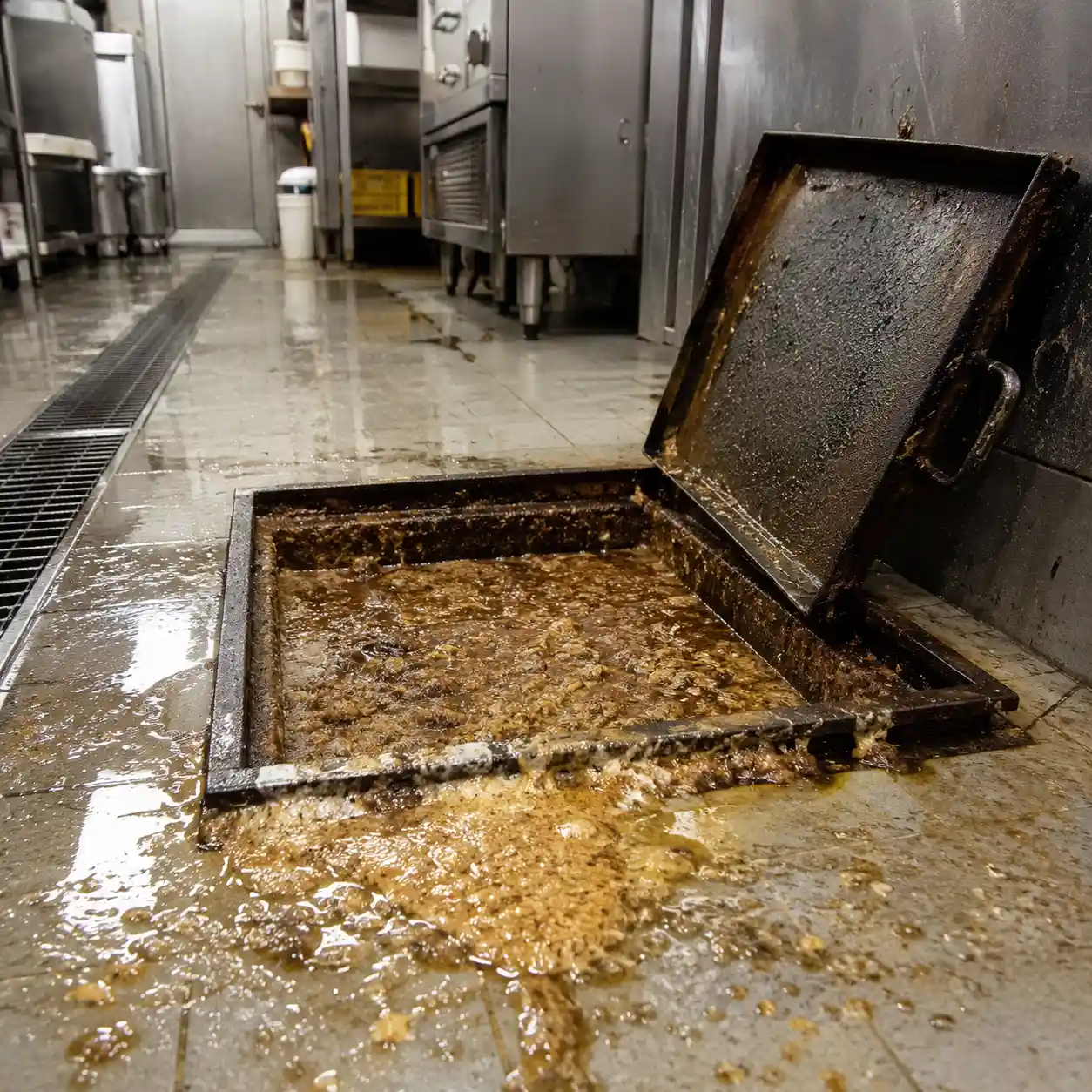
Neglecting a grease trap may seem like a way to save time and money, especially during busy kitchen operations, but the risks can quickly outweigh the cost of routine maintenance. As grease, oil, food particles, and sludge accumulate, they can restrict drainage, cause foul odours, trigger wastewater backups, and create serious operational problems for restaurants and hotels. Regular grease trap cleaning in Dubai helps commercial kitchens manage this buildup and reduce the risk of costly drainage and hygiene problems. In Dubai, poor grease trap maintenance can also lead to compliance issues and potential penalties. In short, skipping regular grease trap cleaning can result in blocked drains, unpleasant smells, sewage backups, fines, and even disruption to kitchen operations.
The Immediate Risks of a Neglected Grease Trap
Blockages and Wastewater Backups
As fats, oils, grease, and food solids accumulate inside a grease trap, they can restrict the flow of wastewater and eventually cause blockages. In a busy commercial kitchen, a serious blockage can lead to wastewater backing up into sinks, floor drains, or other areas, disrupting food preparation and service.
Persistent Foul Odours
A poorly maintained grease trap can develop strong, unpleasant odours as trapped grease and organic waste break down. Surface cleaning will not solve the underlying problem when the source is inside the trap, and the smell can become increasingly noticeable if cleaning is delayed.
Increased Pest Activity
Accumulated food waste and grease can create conditions that attract insects and other pests. For restaurants and other food-service businesses, this can add another hygiene concern and make effective grease trap maintenance an important part of overall kitchen sanitation.
The Compliance Risks
Potential Fines and Enforcement
Commercial kitchens are expected to maintain their grease management systems properly and comply with applicable local requirements. Failure to meet relevant requirements can result in warnings, corrective actions, or financial penalties, depending on the nature and severity of the violation. Businesses should verify current requirements with the relevant local authority rather than relying on assumptions about cleaning frequency or enforcement.
Possible Business Disruption
Serious drainage, hygiene, or compliance problems can interrupt kitchen operations until the underlying issue is corrected. For restaurants and hotels, even a short interruption during a busy service period can result in lost revenue and additional operational costs.
Missing Maintenance Documentation
Regular cleaning is only part of responsible grease trap management. Businesses should maintain appropriate service records, waste-disposal documentation, and other relevant paperwork required for their operations. Having clear records can also make it easier to demonstrate that routine maintenance is being carried out.
The Financial Risks of Delaying Cleaning
Ignoring a grease trap can create costs well beyond the cleaning service itself, including:
- Emergency plumbing expenses when a blockage requires immediate attention
- Additional repair costs if wastewater backups affect surrounding fixtures or drainage systems
- Lost revenue when kitchen operations are interrupted
- Extra cleaning and sanitation costs following an overflow
- Reputational damage caused by persistent odours, drainage problems, or visible hygiene issues
For businesses comparing the cost of prevention with the cost of an emergency, professional grease trap cleaning services in Dubai can help maintain the system before minor buildup develops into a larger operational problem.
Routine Cleaning vs. Delayed Maintenance
| Situation | Likely Outcome |
| Routine scheduled cleaning | Better control of grease buildup and predictable maintenance |
| Cleaning is delayed | Increasing grease accumulation, odours, and drainage issues |
| Trap is heavily neglected | Higher risk of overflow, blockage, and emergency service |
| Repeated maintenance or compliance problems | Greater operational disruption and potential enforcement action |
The key point is simple: routine maintenance is generally easier to manage than an emergency caused by a neglected grease trap. The appropriate cleaning frequency depends on factors such as kitchen volume, grease production, trap size, and the type of food being prepared.
How to Prevent These Problems
- Establish a cleaning schedule based on your kitchen’s actual grease and food-waste output.
- Monitor early warning signs such as foul odours, slow drainage, visible grease buildup, and recurring blockages.
- Keep service records and relevant disposal documentation organised.
- Use a qualified professional when the trap requires thorough cleaning or waste removal.
- Review the cleaning frequency regularly and adjust it if your kitchen’s production volume changes.
Don’t wait for a shutdown to fix it. Frontline Cleaning Services keeps Dubai and Sharjah kitchens compliant with reliable grease trap cleaning services and full documentation for every visit. Book your inspection before it becomes an emergency.
Frequently Asked Questions
Can a restaurant face penalties for poor grease trap maintenance?
Potentially, yes. Businesses that fail to meet applicable local requirements may face warnings, corrective actions, fines, or other enforcement measures depending on the circumstances.
How quickly can a neglected grease trap cause a backup?
There is no fixed timeframe. The risk depends on the trap’s capacity, the amount of grease entering the system, kitchen volume, and how much buildup has already accumulated.
Is it cheaper to clean only when a problem occurs?
Usually, relying on emergency cleaning is less predictable and can be more expensive when blockages, overflows, plumbing repairs, or business disruption are involved. A properly planned maintenance schedule helps reduce these risks.
How often should a commercial grease trap be cleaned?
There is no single schedule suitable for every kitchen. Restaurants, hotels, cafés, and high-volume food-service operations should determine cleaning frequency according to grease production, trap capacity, usage, and applicable local requirements.