There is no single cleaning schedule that works for every commercial kitchen in Dubai. A small café with limited FOG output may need less frequent servicing, while a busy restaurant, hotel, or catering kitchen can require much more frequent cleaning. The right interval depends on the trap size, kitchen volume, grease buildup, and how heavily the system is used. Regular grease trap cleaning in Dubai helps prevent foul odors, slow drainage, blockages, and unexpected kitchen disruptions.
As a practical starting point, many commercial kitchens may need cleaning every 1 to 4 weeks, but the actual frequency should be based on the condition and usage of the individual trap rather than a fixed calendar schedule.
When Should a Grease Trap Be Cleaned?
As a general rule, a grease trap should be cleaned once it’s 25% full of grease and solids — this is known in the industry as the “1/4 rule,” and it’s what most Dubai Municipality-approved cleaning companies use to set a maintenance schedule. Waiting until it’s visibly overflowing means you’ve already missed the window.
Here’s how that typically breaks down by kitchen type:
| Kitchen Type | Recommended Cleaning Frequency |
| High-volume restaurants & hotel kitchens | Weekly to bi-weekly |
| Mid-sized cafés and casual dining | Every 2–4 weeks |
| Small food outlets, kiosks, and takeaways | Monthly to every 6 weeks |
| Shared/commercial kitchen facilities | Weekly (due to combined FOG output) |
What Actually Determines Your Cleaning Frequency
Three things move the needle more than anything else:
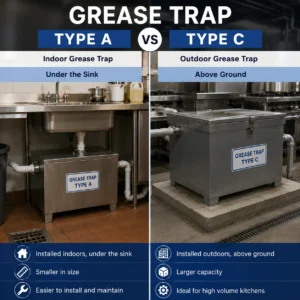
- Trap size. A small under-sink Type A trap fills up far faster than a larger external Type C interceptor — even if both kitchens cook similar volumes.
- Menu type. Kitchens that fry heavily (think shawarma, fried chicken, or Indian cuisine with ghee-heavy dishes) generate FOG far faster than a salad bar or juice counter.
- Cover count. A restaurant doing 300 covers a night is going to need a very different schedule than a 40-seat café — even with an identical menu.
Why This Isn’t Just a “Nice to Have” Schedule
Dubai’s climate plays a role here too — high ambient temperatures accelerate grease breakdown and bacterial growth inside the trap, which means odor and blockage problems show up faster here than in cooler climates. This is one of the reasons Dubai Municipality treats grease trap maintenance as a compliance issue, not a courtesy service — we cover the exact regulatory requirements in our Dubai Municipality grease trap rules and compliance guide.
Signs You’ve Waited Too Long
If you’re not sure whether your current schedule is working, these are the tells:
- Standing water or slow drainage near the kitchen sink
- A sour, rancid smell that lingers even after mopping
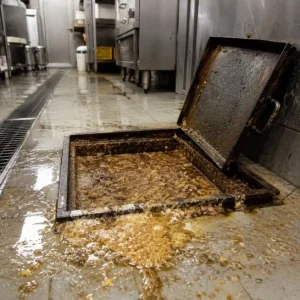
- Grease visibly pooling at the surface when you open the trap
- Repeated plumber call-outs for the same blockage
A closer look at each of these — and what they mean for your system — is in our guide on signs your grease trap needs immediate cleaning.
Setting a Schedule That Actually Works
The most reliable approach isn’t a calendar guess — it’s a short trial period. Frontline Cleaning Services typically starts new commercial clients on a bi-weekly inspection for the first month, tracks how quickly grease accumulates, and then locks in a realistic recurring schedule from there. It’s a small upfront step that avoids both extremes: paying for cleanings you don’t need, or risking a blockage you really didn’t want.
Keep your kitchen compliant, odor-free, and running smoothly. Frontline Cleaning Services provides scheduled and on-demand grease trap cleaning in Dubai and Sharjah, with a custom maintenance plan built around your kitchen’s actual output — not a generic calendar. Book an inspection today.
Frequently Asked Questions
How should a restaurant clean its grease trap in Dubai?
Most restaurants need cleaning every 1 to 2 weeks for high-volume kitchens, and every 2 to 4 weeks for smaller or lower-volume kitchens, based on the 25%-full rule.
Can I go longer than a month between cleanings?
Only for very low-FOG-output businesses like juice bars or bakeries with minimal frying — and even then, quarterly inspections are still recommended to catch build-up early.
Does grease trap size affect how often I need cleaning?
Yes — smaller traps fill up faster relative to their capacity and generally need more frequent attention than larger external interceptors.