The first time I saw a restaurant owner clean a grease trap himself, he was standing over it with a bucket, gloves, and plenty of confidence. He had removed the obvious grease and thought the job was done. A few days later, the kitchen was dealing with the same foul smell and slow drainage because the heavier waste had settled beneath the surface and was never properly removed. So, can you clean a grease trap yourself? Yes, for basic maintenance and smaller traps but thorough cleaning, waste removal, and recurring buildup are usually better handled by professionals.
Here’s an honest breakdown of what you can handle yourself and when professional grease trap cleaning in Dubai is actually the better call.
What DIY Grease Trap Cleaning Can Handle
For small traps with light buildup, basic maintenance is realistic to do yourself. This typically includes:
- Skimming the top layer of grease off the surface
- Scraping visible solids into a waste container
- Wiping down the trap’s interior walls
- Checking the baffles for obvious blockages
This kind of light upkeep, done regularly between full cleanings, can help stretch the time between professional visits. It doesn’t replace a full cleaning, but it reduces how quickly the trap fills back up.
Where DIY Cleaning Falls Short
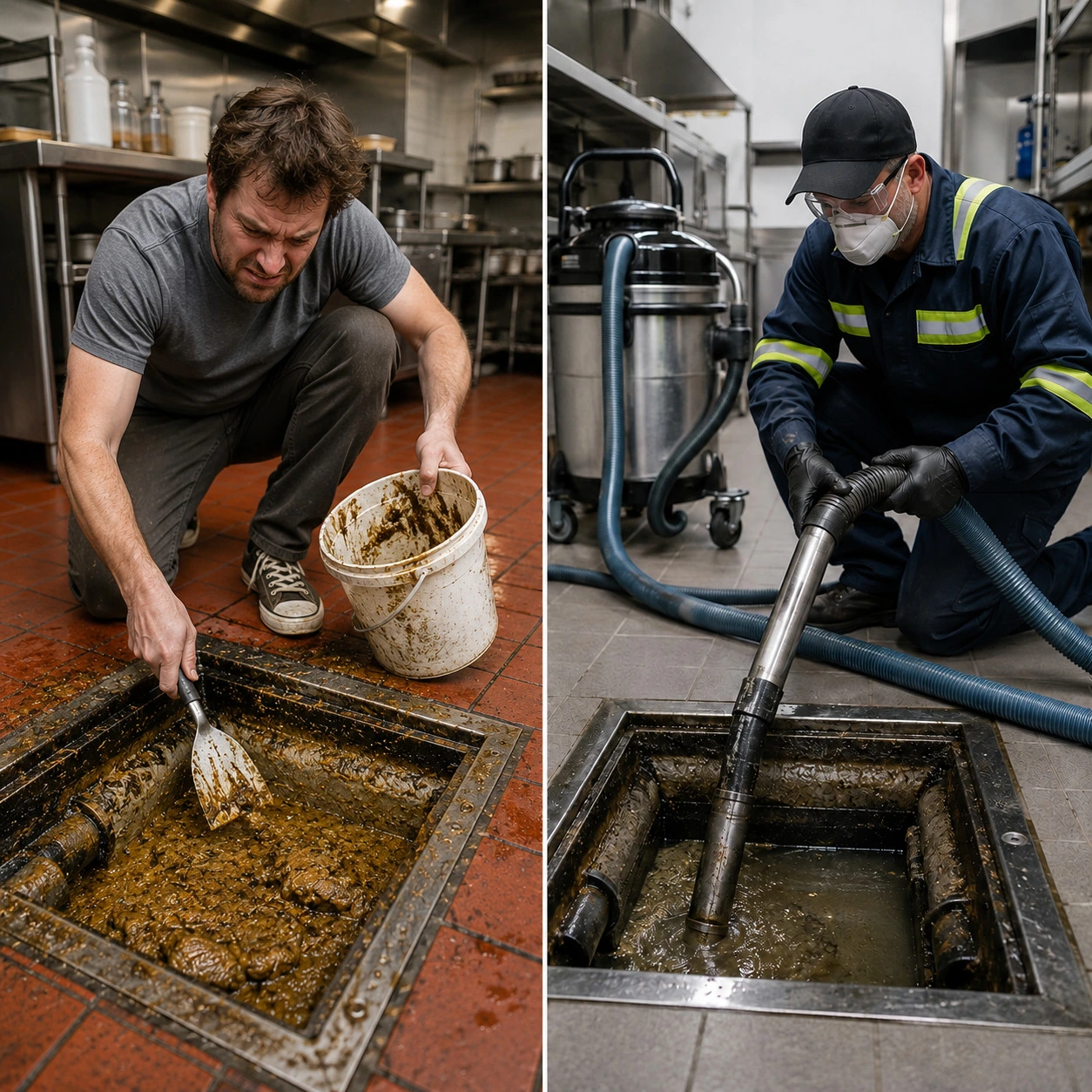
The biggest issue with DIY cleaning is that it usually only reaches what’s visible from the top. Grease traps hold multiple layers, floating fat on top, wastewater in the middle, and solid sludge settled at the bottom. A bucket and scraper rarely reach that bottom layer effectively, which means the trap looks cleaner than it actually is.
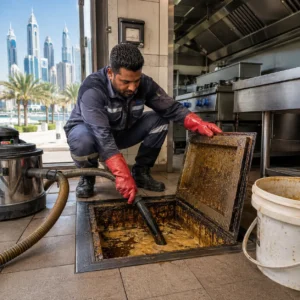
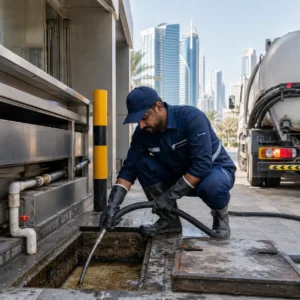
This is exactly the kind of incomplete cleaning that leads to a kitchen sewage smell returning within days, even after staff feel like they’ve done a thorough job. Full extraction, usually done with vacuum equipment, is the only reliable way to remove all three layers completely.
There’s also a disposal issue. Grease waste generally needs to be disposed of according to local regulations, not poured down a drain or thrown in regular trash. DIY cleaning often skips this step simply because staff aren’t aware it applies.
Signs DIY Isn’t Enough Anymore
A few signs suggest it’s time to bring in professional service rather than continuing with in-house cleaning:
- The trap fills back up faster than expected after cleaning
- A smell persists even after skimming and scraping
- Drains connected to the trap are slow or gurgling
- It’s been more than a few months since a full professional cleaning
- Staff aren’t confident they’re reaching the bottom sludge layer
If any of these sound familiar, the trap likely needs a full extraction rather than another round of surface cleaning.
Cost Comparison: DIY vs Professional Cleaning
DIY maintenance has no direct cost beyond staff time, which makes it appealing for light, routine upkeep. But when incomplete cleaning leads to blockages, backups, or a bad smell affecting service, the cost of fixing that problem, plus potential lost business during downtime, usually outweighs what a full professional cleaning would have cost in the first place.
Professional cleaning also reduces the risk of unplanned emergency calls. If a trap does back up unexpectedly outside of a scheduled visit, emergency grease trap cleaning is available, though it typically costs more than a routine appointment booked in advance.
Why Regular Professional Cleaning Still Matters
Even kitchens that handle light DIY maintenance well still need full professional cleaning on a regular schedule. Surface skimming slows buildup, but it doesn’t remove what’s settled at the bottom, and that sludge layer is what eventually causes blockages and odor problems if left unaddressed for too long.
Most commercial kitchens do well with professional cleaning every 4 to 8 weeks, depending on volume, with light DIY maintenance in between to help extend that interval.
Making the Right Call for Your Kitchen
DIY cleaning has a real place in day-to-day maintenance, but it works best as a supplement to professional service, not a replacement for it. Kitchens that rely on DIY alone tend to end up with the same recurring problems: persistent smells, slow drains, and eventually a backup that needs urgent attention.
If your kitchen’s grease trap needs a proper professional clean, or you’re not sure whether your current routine is enough, Frontline Cleaning Services can assess it and set up a schedule that keeps things running without surprises. Get in touch to book an assessment.
Frequently Asked Questions
Is it safe to clean a grease trap myself?
Light surface maintenance is generally safe with basic precautions, but full extraction involves handling waste that needs proper disposal, which is better suited to a professional team.
How often should I do DIY grease trap maintenance?
Skimming and scraping can be done weekly or as needed between professional cleanings, depending on how much grease the kitchen produces.
Can DIY cleaning fully replace professional grease trap service?
No. DIY methods typically only reach the surface layer, leaving solid waste at the bottom of the trap, which requires a full professional cleaning to remove.
What happens if I never get the trap professionally cleaned?
Untreated buildup eventually leads to blockages, backups, and persistent odor problems that are more costly and disruptive to fix than routine professional cleaning.
Is emergency grease trap cleaning available if DIY maintenance fails?
Yes, emergency service is available for unexpected backups or overflow, though it’s generally priced higher than a scheduled routine cleaning.