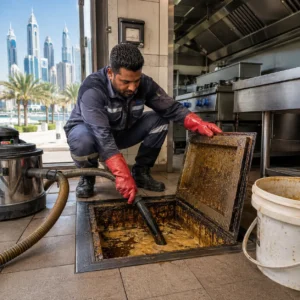
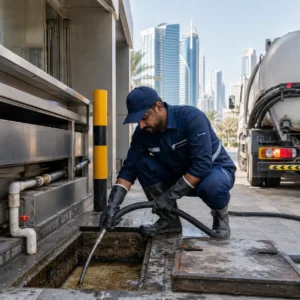
A homeowner in Mirdif once found water running down her outside wall right after a storm: no crack, no leak, just a gutter that looked fine but wasn’t. By the time she called us, the damage was already done. In years of cleaning gutters across Dubai, I’ve noticed the worst damage rarely comes from a gutter that looks broken. It comes from one that quietly fills up with dust over time, until one storm proves it’s been clogged all along. Here’s what really causes that damage, the warning signs to watch for, and how regular cleaning stops it before it starts.
Quick Answer: Rain gutter cleaning prevents water damage by keeping the path from your roof to the ground clear, so rainwater flows into the downpipes instead of overflowing onto walls, windows, and the foundation. At Frontline Cleaning Services, we help keep gutters free from debris to reduce the risk of roof leaks, wall staining, mould, and even structural damage that often appears long after the storm has passed.
Why a Clogged Gutter Causes More Damage Than People Expect
A gutter has one job: move water away from the building. When it’s blocked, that water doesn’t just disappear, it goes somewhere else, usually somewhere worse.
Overflow during heavy rain runs down exterior walls instead of through the downpipe. Over time, that water seeps into small gaps around windows, doors, and wall joints. It can pool at the roofline and work its way under roofing materials. In Dubai, where many buildings go months without rain, none of this is visible until the first real storm hits, and by then the water has already found its way in.
The homeowner in Mirdif I mentioned had six years of dust, sand, and dry leaves packed into her gutter corners. None of it was obvious from the ground. It took one storm to reveal it.
What Is Rain Gutter Cleaning?
Rain gutter cleaning is the process of removing accumulated dirt and debris from roof gutters, downpipe openings, corners, joints, and drainage channels.
A complete service may include:
- Removing loose leaves and twigs
- Clearing compacted dirt and sand
- Unblocking downpipe entrances
- Flushing gutters with water
- Checking water flow
- Inspecting visible joints and brackets
- Removing debris from the work area
The purpose is not simply to improve the appearance of the roofline. It is to restore proper drainage and reduce the risk of rainwater entering parts of the building where it should not go.
Why Gutter Cleaning Matters in Dubai
Dubai does not experience rainfall throughout the year, but when rain arrives, it can be intense. Gutters may remain unused for long periods while collecting sand, dust, leaves, bird feathers, and nesting material.
When heavy rain begins, a gutter that appears empty from the ground may already have compacted debris blocking its corners or downpipe openings.
Booking a professional gutter cleaning service in Dubai before the rainy period can help ensure the drainage system is ready to handle sudden water flow. Preventive cleaning is usually easier than repairing damaged ceilings, walls, or exterior finishes after water has entered the property.
Signs That Rain Gutters Need Cleaning
Common warning signs include:
- Water overflowing during rainfall
- Plants growing inside the gutter
- Visible leaves or dirt along the roofline
- Water stains on exterior walls
- Sagging gutter sections
- Dampness near ceilings
- Peeling exterior paint
- Water collecting near the foundation
- Downpipes releasing little or no water
- Birds nesting around gutter areas
Gutters should also be checked after strong winds, nearby construction, dust storms, or roof maintenance.
Step-by-Step Rain Gutter Cleaning Process
1. Inspect the Property
The gutter system should first be checked for access points, roof height, nearby electrical hazards, loose sections, and visible blockages.
2. Remove Loose Debris
Leaves, twigs, plastic, feathers, and other loose materials are removed carefully. Compacted dirt may require suitable gutter tools.
3. Clear Corners and Downpipe Openings
Debris commonly collects at bends, joints, and downpipe entrances. These areas require particular attention because even a small blockage can stop water flow.
4. Flush the Gutter
Water may be used to remove remaining dirt and confirm that the gutter drains in the correct direction.
5. Test the Downpipes
The downpipes should be checked to confirm that water moves through them without backing up.
6. Check Visible Damage
The technician may identify loose brackets, separated joints, cracks, corrosion, poor alignment, or sections that are holding standing water.
Cleaning restores flow, but damaged gutters may require separate repair.
Benefits of Regular Gutter Cleaning
Pros
- Helps prevent roof-edge water buildup
- Reduces overflow onto exterior walls
- Protects fascias and soffits
- Directs water away from foundations
- Reduces dampness and mould risk
- Helps identify damaged gutter sections early
- Extends the working life of the drainage system
- Prevents plants and pests from settling in gutters
Limitations
- Cleaning cannot repair cracked or poorly installed gutters.
- Internal roof leaks may have other causes.
- Downpipes may require separate unblocking.
- High-rise or difficult-access properties need specialist equipment.
- Gutters may block again if nearby trees shed heavily.
How Often Should Rain Gutters Be Cleaned?
Most properties should have gutters inspected at least once or twice a year. More frequent cleaning may be needed when:
- Trees are close to the building
- Birds regularly nest near the roof
- The property is exposed to heavy dust
- Construction is taking place nearby
- Gutters have narrow channels
- Previous blockages have caused overflow
- The building has a complex roof design
In Dubai, checking gutters before the expected rainy season is a practical preventive step.
Common Gutter Cleaning Mistakes
Waiting for Visible Overflow
Overflow means the drainage system is already failing. Cleaning should be arranged before water damage appears.
Ignoring Downpipes
A clear gutter can still overflow if the connected downpipe is blocked.
Using Unsafe Access Methods
Standing on unstable ladders, roof edges, chairs, or balconies can cause serious injury. Difficult or elevated gutters should be handled by trained professionals.
Applying Excessive Water Pressure
High pressure may damage joints, move roof materials, or force water into gaps.
Cleaning Without Checking Gutter Alignment
A gutter may be clean but still hold water if it is sagging or incorrectly sloped.
Leaving Removed Debris on the Roof
Debris left nearby may wash back into the gutter during the next rainfall.
Final Recommendation
Rain gutter cleaning isn’t a cosmetic task, it’s the one piece of maintenance standing between a normal rainstorm and a damaged ceiling, wall, or foundation. Because Dubai’s dry stretches hide the buildup so well, the smartest move is to check gutters before the rain arrives, not after the stain appears. If it’s been a while since yours were inspected, or you’ve noticed any of the warning signs above, it’s worth getting ahead of it now.
Frequently Asked Questions
Can blocked gutters cause roof leaks?
Yes. Blocked gutters can cause rainwater to pool near the roof edge and enter through gaps in roofing materials, flashing, or joints.
How does gutter cleaning protect exterior walls?
Clear gutters direct water into downpipes instead of allowing it to overflow and run down walls, where it can damage paint, plaster, and exterior finishes.
Can gutter cleaning prevent foundation damage?
It can reduce the risk by directing rainwater away from the base of the property. However, existing foundation problems may require specialist assessment.
Is ground-based gutter cleaning effective?
Ground-based cleaning can be effective for loose debris and accessible gutters, but compacted dirt or damaged sections may require closer access.
Should downpipes be cleaned with the gutters?
Yes. Downpipes are part of the same drainage system, and a blockage inside them can cause water to back up into otherwise clean gutters.
When is the best time to clean gutters in Dubai?
The best time is before the rainy period and after events that may cause debris buildup, such as strong winds, dust storms, or nearby construction.