Your sofa is one of the most frequently used pieces of furniture in your home, collecting dust, body oils, food crumbs, pet hair, and allergens every day. While regular vacuuming helps, it doesn’t remove the dirt trapped deep inside the upholstery and cushions.
As a Senior Cleaning Supervisor at Frontline Cleaning Services, I’ve cleaned hundreds of sofas across Dubai—from family homes and apartments to luxury villas. One of the biggest misconceptions I see is homeowners repeatedly scrubbing visible stains while ignoring the dirt and moisture hidden beneath the fabric. In many cases, this makes stains harder to remove and leaves the sofa smelling musty.
This guide explains how to deep clean your sofa safely, when DIY methods are suitable, and when it’s better to hire a sofa cleaning service in Dubai.
Quick Answer
Deep cleaning a sofa involves removing embedded dust, stains, body oils, allergens, and odours—not just surface dirt.
A proper deep clean includes:
- Checking the upholstery care label
- Vacuuming every section thoroughly
- Testing the cleaning solution
- Treating stains individually
- Cleaning in small sections
- Removing excess moisture and detergent residue
- Allowing the sofa to dry completely
The safest method depends on your sofa’s fabric, care code, and the type of stain you’re dealing with.
Why Deep Cleaning Matters
In Dubai, sofas collect more than everyday dust. Fine desert sand enters homes through open doors, balconies, and even air-conditioning systems. Combined with humidity and daily use, these particles settle deep into the upholstery and gradually wear down fabric fibres.
During inspections, I often find sofas that look clean on the surface but contain months of trapped dust, body oils, food residue, and pet hair inside the cushions. These hidden contaminants are usually the reason sofas develop unpleasant odours or lose their fresh appearance.
Regular deep cleaning not only improves hygiene but also helps extend the life of your furniture.
Check the Care Label First
Before using any cleaning product, locate the manufacturer’s care label.
Common upholstery codes include:
- W – Water-based cleaners are generally suitable.
- S – Use only solvent-based upholstery cleaners.
- WS – Either water- or solvent-based cleaners may be used.
- X – Vacuum only or seek professional cleaning.
Even when the care code allows water-based cleaning, always test the product on an inconspicuous area first. In my experience, older sofas and imported fabrics sometimes react differently due to fading, previous treatments, or fabric dyes.
Know Your Sofa Material
Different upholstery materials require different cleaning methods.
Microfibre
Microfibre is durable and relatively easy to clean, but uneven moisture can leave visible water marks.
Cotton and Linen
Natural fabrics absorb moisture quickly and may shrink or develop water rings if over-wet.
Velvet
Velvet is delicate and can lose its soft pile when scrubbed aggressively. Expensive velvet sofas are usually better handled by professionals.
Polyester Blends
These fabrics generally respond well to controlled cleaning but can pill if brushed too hard.
Leather
Leather requires specialised leather cleaners and conditioners. Fabric shampoos and excessive water can permanently damage leather surfaces.
If you’re unsure about the material or the care label is missing, it’s safer to consult a professional before cleaning the entire sofa.
Tools You’ll Need
Before starting, gather the following:
- Vacuum cleaner with upholstery attachment
- White microfibre cloths
- Soft upholstery brush
- Upholstery-safe cleaning solution
- Spray bottle (if required)
- Clean towels
- Protective gloves
- Portable fan for drying
I always recommend using white cloths because coloured towels can transfer dye onto damp upholstery.
Step 1: Inspect the Sofa Carefully
Before cleaning, inspect the sofa under good lighting.
Look for:
- Existing stains
- Fabric damage
- Loose seams
- Water marks
- Pet accidents
- Grease build-up on armrests
- Colour fading
- Mould-like spots
I usually take photos before starting a professional cleaning job. This helps identify existing damage and ensures there’s a clear record of the sofa’s condition before treatment begins.
Step 2: Vacuum Thoroughly
Vacuuming is one of the most important parts of deep cleaning.
Remove the cushions and vacuum:
- Seat cushions
- Cushion backs
- Seams
- Crevices
- Armrests
- Under the cushions
- The backrest
- The floor beneath the sofa
Skipping this step often turns dry dust into muddy residue once moisture is added, making the upholstery much harder to clean.
Step 3: Treat Stains Individually
Every stain is different, so avoid using one cleaner for everything.
Food and Drink
Blot fresh spills immediately instead of rubbing them deeper into the fabric.
Body Oils
Armrests and headrests often collect oils from skin and hair. These areas usually require more attention than the rest of the sofa.
Pet Accidents
Pet urine often penetrates the foam beneath the fabric. Surface cleaning may remove the smell temporarily, but the odour can return if the padding isn’t properly treated.
Ink and Dye
Ink, cosmetics, and transferred clothing dyes are among the most difficult stains to remove. Always test any cleaning product first and stop immediately if colour transfers onto your cloth.
One thing I’ve learned after years of cleaning sofas across Dubai is that the biggest mistake homeowners make isn’t choosing the wrong cleaner—it’s using too much water. Excess moisture can soak into the padding, increase drying time, and create lingering odours, especially during Dubai’s humid months.
Step 4: Clean in Small Sections
Work on one section at a time instead of cleaning the entire sofa at once. This helps you control moisture and achieve an even finish.
A safe process is:
- Apply a small amount of the approved upholstery cleaner.
- Gently loosen dirt using a soft brush or microfibre cloth.
- Blot the area instead of scrubbing aggressively.
- Remove any remaining cleaning residue with a clean, damp cloth if the fabric allows.
- Compare the cleaned section with the surrounding fabric before moving on.
From my experience, homeowners often assume more cleaning solution means better results. In reality, using too much product usually leaves sticky residue that attracts dirt again within a few weeks.
Step 5: Remove Moisture and Residue
Leaving detergent inside the upholstery can make the fabric stiff and cause it to soil more quickly.
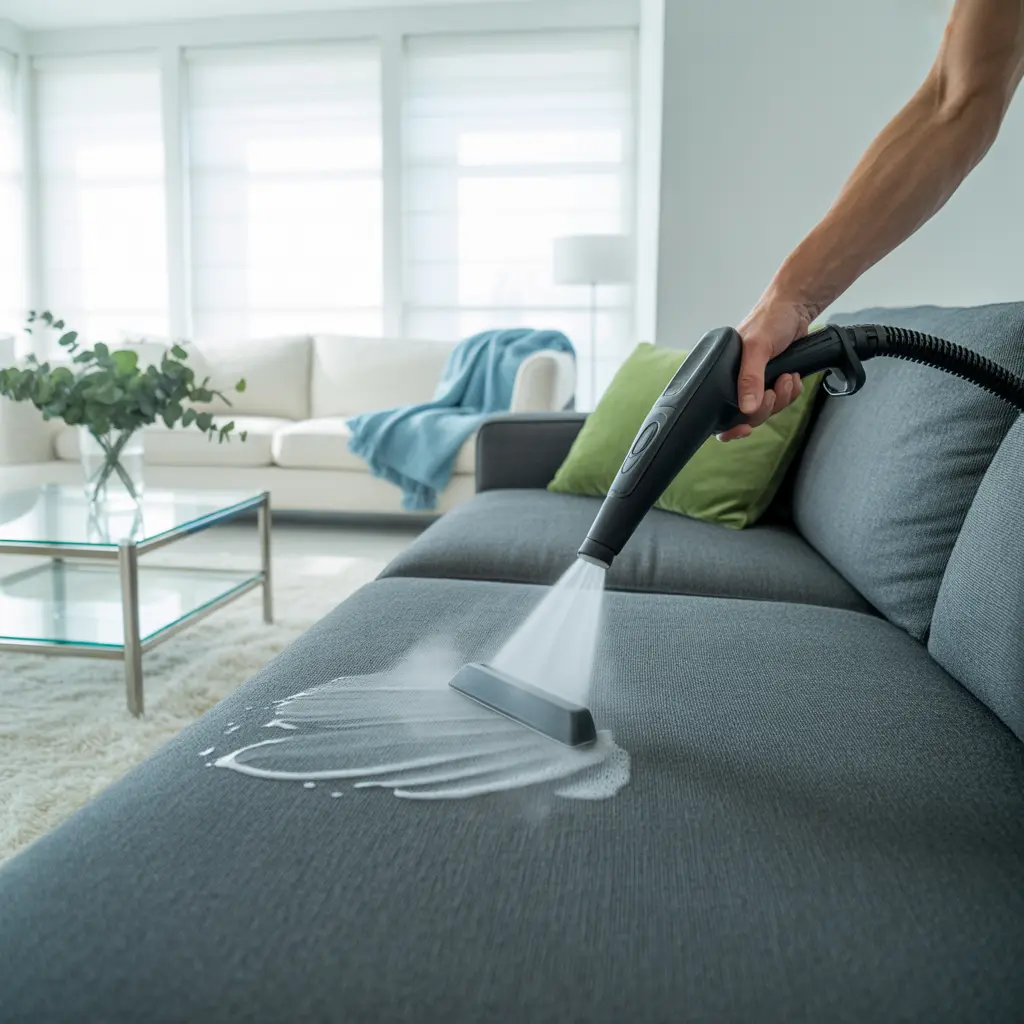
Where the care label permits, blot the area with clean water and absorb as much moisture as possible using dry white towels. Professional upholstery extraction machines remove far more moisture than household equipment, helping sofas dry faster and reducing the risk of odours.
If your sofa has heavy staining, widespread soiling, or deep odours, hiring a sofa cleaning service in Dubai is often the safest option. Professional extraction equipment cleans beneath the fabric without over-saturating the cushions.
Step 6: Allow the Sofa to Dry Completely
Drying is just as important as cleaning.
To speed up drying:
- Open windows when weather conditions allow.
- Use ceiling or portable fans to improve airflow.
- Stand removable cushions upright.
- Keep the sofa uncovered while it dries.
- Avoid sitting on it until it’s completely dry.
Dubai’s climate can be misleading. While outdoor temperatures are high, indoor humidity and air-conditioned environments can slow the drying process, especially for thick cushions. If a sofa still feels cool or damp, it needs more ventilation before use.
When Should You Call a Professional?
DIY cleaning works well for light maintenance, but professional cleaning is recommended when:
- The care label is marked S or X.
- The sofa is made from velvet, suede, or delicate fabrics.
- Stains cover a large area.
- Pet urine has soaked into the cushions.
- Unpleasant odours return after cleaning.
- Water marks are already visible.
- The fabric transfers colour during testing.
- The sofa remains damp for an unusually long time.
Over the years, I’ve seen many sofas become permanently damaged because owners tried multiple household remedies before seeking professional help. In most cases, treating the stain correctly the first time gives the best chance of a successful result.
Common Deep-Cleaning Mistakes
Avoid these common mistakes:
- Ignoring the upholstery care label.
- Scrubbing stains aggressively.
- Using excessive amounts of water.
- Applying multiple household chemicals together.
- Cleaning only the stain instead of blending the surrounding fabric.
- Using the sofa before it’s completely dry.
These mistakes can lead to fading, water rings, fabric damage, and persistent odours.
How Often Should You Deep Clean Your Sofa?
The right frequency depends on how your sofa is used.
Consider professional deep cleaning every 6–12 months, or sooner if:
- You have children or pets.
- Food and drinks are regularly consumed on the sofa.
- Someone in your home has allergies.
- Your home experiences heavy dust.
- You notice stains, odours, or dull-looking upholstery.
Between deep-cleaning sessions, vacuum your sofa weekly and clean spills as soon as they happen to prevent permanent staining.
Final Thoughts
Deep cleaning a sofa is more than removing visible stains—it’s about protecting the fabric, removing hidden dirt, and extending the life of your furniture.
After years of cleaning sofas across Dubai, I’ve found that the best results always come from following the correct process: inspect the upholstery, check the care label, vacuum thoroughly, treat stains carefully, control moisture, and allow enough time for drying. Rushing the job or using excessive water often causes more damage than the original stain.
If your sofa is heavily soiled, has persistent odours, or is made from delicate upholstery, professional cleaning is a worthwhile investment that helps preserve both its appearance and comfort.
Frequently Asked Questions
Can I deep clean any sofa with water?
No. Always check the upholstery care label first. Some fabrics require solvent-based cleaning or professional treatment.
Does baking soda deep clean a sofa?
No. Baking soda can help reduce light surface odours but won’t remove embedded dirt, body oils, allergens, or deep stains.
How long does a sofa take to dry?
Drying time depends on the fabric, cushion thickness, moisture used, airflow, and indoor humidity. Proper ventilation helps speed up the process.
Can every stain be removed?
No. Some stains become permanent due to bleach, fabric dyes, heat, or previous cleaning attempts. A professional can often improve their appearance, but complete removal isn’t always possible.
Why does my sofa smell after cleaning?
The most common causes are excess moisture, detergent residue, poor ventilation, or contamination that has reached the foam cushions.
Is professional sofa cleaning worth it?
Yes, especially for delicate upholstery, deep stains, pet accidents, persistent odours, or sofas that require hot water extraction. Professional cleaning removes contaminants that regular surface cleaning cannot reach.