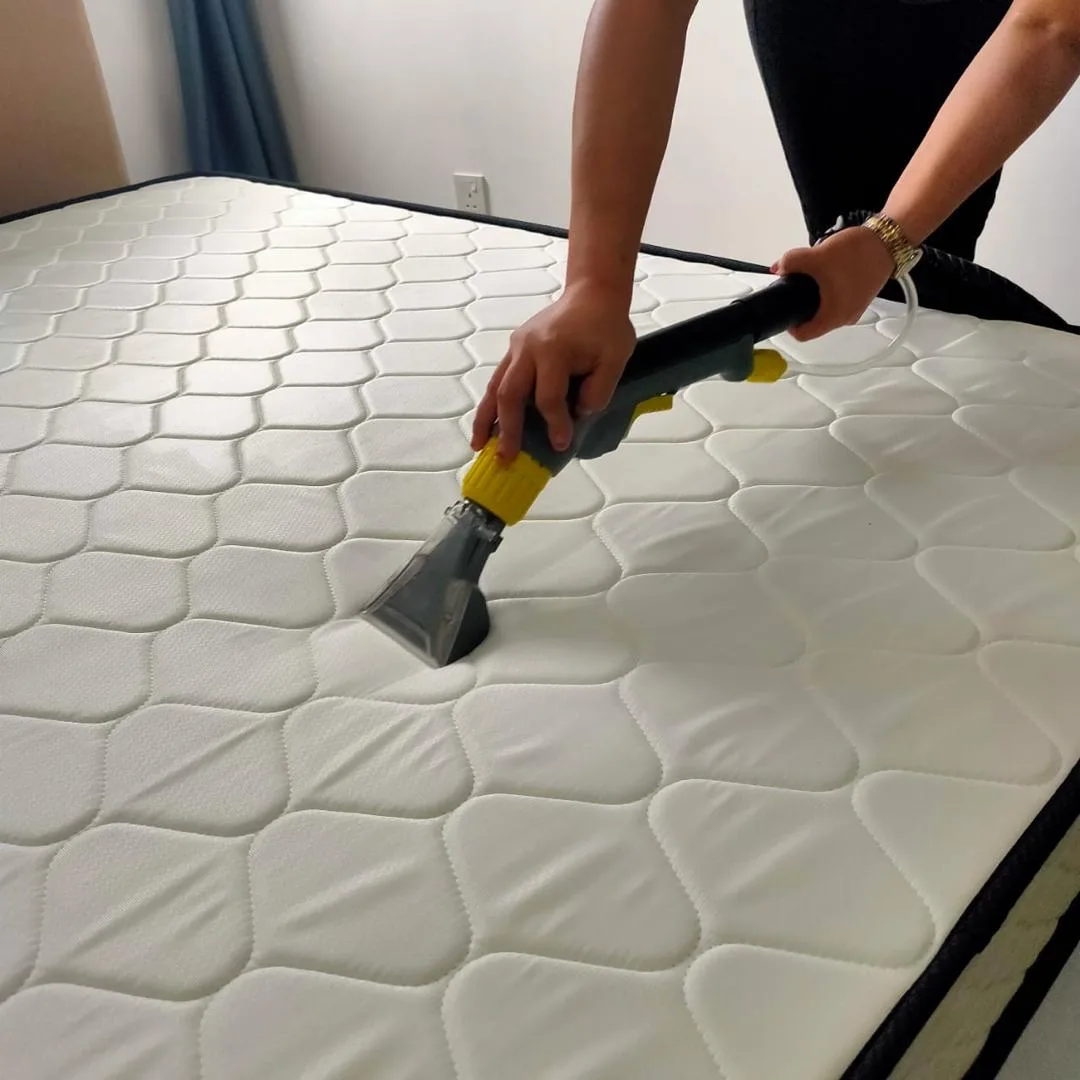
Sara used to wake up every morning with itchy eyes, sneezing, and a blocked nose, even though her bedroom looked perfectly clean. After speaking with frontline cleaning services, she discovered that the real problem was hidden inside her mattress: dust mites, allergens, dead skin, and trapped moisture.
Quick Answer: Professional mattress cleaning can help allergy sufferers by removing dust mites, pollen, pet dander, dead skin, sweat residue, and other microscopic particles trapped inside the mattress. In Dubai’s warm, dusty environment, regular deep cleaning can improve mattress hygiene and may reduce exposure to common indoor allergens.
Mattress cleaning is especially useful for people who experience:
- Morning sneezing
- Itchy or watery eyes
- Nasal congestion
- Skin irritation
- Night-time coughing
- Allergy symptoms that worsen in bed
While cleaning cannot cure allergies, it can create a cleaner sleeping environment and reduce the allergens that may trigger symptoms.
Why Mattresses Can Trigger Allergies
A mattress may look clean on the surface while still holding a large amount of invisible debris. Every night, the mattress collects dead skin cells, sweat, body oils, dust, and particles carried in from outside.
These conditions can create a suitable environment for dust mites. Dust mites are microscopic organisms that feed on dead skin cells. Their waste particles and body fragments can become airborne when a person moves, changes bedding, or lies down.
For sensitive individuals, exposure may contribute to sneezing, coughing, congestion, itchy skin, or breathing discomfort.
Other allergens that may collect inside a mattress include:
- Pollen
- Pet hair and dander
- Mould spores
- Fine dust
- Fabric fibres
- Bacteria
- Residue from spills
Regular vacuuming of the room may remove surface dust, but it usually cannot reach the deeper layers of the mattress.
Why Mattress Cleaning Matters in Dubai
Dubai’s climate can make mattress hygiene particularly important. Fine dust can enter homes through doors, windows, air-conditioning systems, clothing, and footwear. Warm temperatures and indoor humidity may also encourage moisture buildup, especially in poorly ventilated bedrooms.
Air conditioning helps keep rooms comfortable, but mattresses can still absorb sweat and humidity during sleep. Over time, this moisture may combine with dust and organic material.
People searching for mattress cleaning services in Dubai should look for a service that focuses on deep allergen removal rather than simply spraying fragrance or cleaning only the visible surface.
A proper cleaning process should target the particles inside the fabric and upper mattress layers where dust mites and allergens commonly accumulate.
Common Signs Your Mattress May Need Cleaning
Allergy sufferers should consider professional mattress cleaning when they notice:
- Symptoms are stronger after waking up
- Sneezing begins after lying on the bed
- The mattress has not been cleaned for a long time
- Dust quickly returns after cleaning the bedroom
- A pet regularly sleeps on the bed
- The mattress has visible stains
- There is a musty smell
- The bedroom feels humid
- The mattress was recently moved or stored
- Someone in the home has asthma or dust allergies
These signs do not always prove that the mattress is causing the allergy. However, they can indicate that the sleeping environment needs closer attention.
How Professional Mattress Cleaning Works
The exact method may vary depending on the mattress material, condition, and cleaning company. A professional service often includes the following steps.
Mattress Inspection
The technician checks the mattress type, fabric, stains, moisture level, and overall condition. This helps determine which cleaning method is safe.
Deep Vacuuming
A high-powered vacuum is used to remove loose dust, skin particles, hair, and debris from the mattress surface and seams.
This step is especially important because ordinary household vacuums may not have enough suction to remove deeply settled particles.
Stain Treatment
Visible stains from sweat, food, drinks, or other substances may be treated individually. Cleaning products should be suitable for the fabric and should not leave harsh residue.
Steam or Low-Moisture Cleaning
Depending on the mattress, the technician may use controlled steam, hot-water extraction, or a low-moisture cleaning method.
Heat may help reduce dust mites and some microorganisms, while extraction equipment removes loosened dirt and moisture.
Deodorising and Drying
A neutral deodorising treatment may be applied if needed. The mattress should then be allowed to dry completely before bedding is replaced.
Proper drying is essential because excessive moisture left inside a mattress may encourage odour or mould growth.
Mattress Cleaning Methods Compared
| Cleaning method | Best for | Main benefit | Limitation |
| Deep vacuuming | Surface dust and allergens | Removes loose particles | May not remove stains or deeply embedded debris |
| Steam cleaning | Dust mites and deeper hygiene | Uses heat to loosen dirt | Not suitable for every mattress material |
| Hot-water extraction | Heavily soiled mattresses | Provides deeper cleaning | Requires careful drying |
| Low-moisture cleaning | Sensitive mattress materials | Faster drying time | May be less effective for heavy staining |
| Spot treatment | Localised stains | Targets specific areas | Does not clean the whole mattress |
The best method depends on the mattress manufacturer’s instructions, material, age, and condition.
Can Mattress Cleaning Help With Dust Mite Allergies?
Mattress cleaning may reduce the amount of dust mite waste and allergen particles present in the sleeping area. This can be helpful for people whose symptoms become worse at night or in the morning.
However, cleaning should be part of a wider allergy-control routine.
Useful steps include:
- Washing bed sheets weekly in hot water when fabric instructions allow
- Using dust mite-resistant mattress covers
- Vacuuming bedroom floors and upholstery regularly
- Reducing unnecessary fabric items near the bed
- Keeping indoor humidity under control
- Cleaning air-conditioning filters
- Avoiding pets sleeping on the mattress
- Allowing the mattress to air when possible
Mattress cleaning works best when the rest of the bedroom is also kept clean and dry.
What About Bed Bugs?
Bed bugs and allergy-triggering dust mites are different problems. Dust mites are microscopic and usually feed on dead skin, while bed bugs are visible insects that feed on blood.
Some people search for ways to clean a mattress from bed bugs, but normal mattress cleaning alone may not eliminate an infestation. Bed bugs can hide in bed frames, furniture joints, wall gaps, carpets, and electrical outlets.
If bed bugs are suspected, professional pest-control treatment may be required in addition to mattress cleaning.
Warning signs include:
- Small blood marks on sheets
- Dark spots along mattress seams
- Shed insect skins
- Small bites appearing overnight
- Live insects around the bed frame
A mattress should not be soaked with household chemicals or insect sprays unless the product is specifically approved for that use.
How Often Should Allergy Sufferers Clean a Mattress?
There is no single schedule that suits every household. Cleaning frequency depends on bedroom conditions and the person’s sensitivity.
A mattress may need more frequent cleaning when:
- The user has severe dust allergies
- Pets are allowed on the bed
- The room gathers dust quickly
- The mattress is used by children
- Sweating is heavy during sleep
- The bedroom has high humidity
- Food or drinks are consumed in bed
- The mattress has been stored
For many homes, professional cleaning once or twice a year may be a practical starting point. Allergy sufferers may benefit from more frequent assessment based on symptoms and indoor conditions.
How to Choose a Mattress Cleaning Company
Before booking, ask the provider:
- Which cleaning method will be used?
- Is the method safe for your mattress material?
- How long will drying take?
- Is deep vacuuming included?
- Are stain treatments charged separately?
- Are the products suitable for allergy sufferers?
- Will strong fragrances be used?
- Is bed bug treatment included or separate?
- Does the service include both sides of the mattress?
- What preparation is required before arrival?
Avoid choosing only on price. A very low quotation may cover surface vacuuming rather than full deep cleaning.
Common Mattress Cleaning Mistakes
One common mistake is using too much water. Mattresses are thick and can take a long time to dry, increasing the risk of trapped moisture.
Other mistakes include:
- Sleeping on the mattress before it is fully dry
- Using strong bleach or harsh chemicals
- Ignoring the underside of the mattress
- Cleaning the mattress but not the bed frame
- Covering stains with fragrance
- Assuming cleaning alone will solve a bed bug infestation
- Forgetting to wash pillows, sheets, and mattress covers
- Keeping the bedroom closed with poor ventilation
Final Recommendation
Mattress cleaning in Dubai can be a valuable part of allergy management because it removes dust, dead skin, pet dander, dust mite debris, and other particles from the sleeping surface. For the best results, choose a professional service that uses a mattress-safe cleaning method, controls moisture carefully, and explains the drying process clearly. Combine deep cleaning with regular bedding care, humidity control, air-conditioning maintenance, and allergen-resistant covers to maintain a healthier sleeping environment.
Frequently Asked Questions
Can mattress cleaning help reduce allergy symptoms?
Professional mattress cleaning can reduce dust mites, pet dander, pollen, dead skin, and other allergens trapped inside the mattress. While it cannot cure allergies, it can create a cleaner and healthier sleeping environment.
How often should allergy sufferers clean their mattress?
Most allergy sufferers should consider professional mattress cleaning once or twice a year. More frequent cleaning may be needed in homes with pets, high dust levels, humidity, or severe allergy symptoms.
Does mattress cleaning remove dust mites?
Professional deep vacuuming and controlled steam cleaning can significantly reduce dust mites and their waste particles. Regular washing of bedding and using a dust mite-resistant mattress cover can provide additional protection.
Is steam cleaning safe for every mattress?
Steam cleaning is not suitable for every mattress type. Memory foam, latex, and delicate materials can be damaged by excessive heat or moisture, so the cleaning method should match the mattress manufacturer’s instructions.
How long does a mattress take to dry after cleaning?
A professionally cleaned mattress normally takes several hours to dry. The exact drying time depends on the mattress thickness, cleaning method, indoor humidity, airflow, and room ventilation.
Can mattress cleaning remove bed bugs?
Standard mattress cleaning cannot completely eliminate bed bugs because they may also hide in bed frames, furniture, carpets, and wall gaps. A professional pest-control treatment is usually required for a complete infestation.