A homeowner once asked me this, and I said, “an hour or two.” I was wrong. Her tank hadn’t been cleaned in almost three years, and the job took five hours because of hardened sludge at the bottom.
Since then, I’ve timed most of my jobs so I can give people real numbers instead of a guess. If you’re asking how long sewage tank cleaning takes, here’s what actually affects the time, based on the work itself. For anyone comparing providers, our team’s approach to sewage tank cleaning in Dubai follows the same timing principles below.
The Honest Answer: It Depends on Three Things
Most sewage tank cleaning jobs fall somewhere between 45 minutes and 4 hours. That’s a wide range, I know. But three factors decide where your job lands on that scale.
1. Tank Size
A standard villa tank, usually holding 1,000 to 3,000 gallons, takes less time than a large commercial or building tank. Bigger tanks simply hold more waste, which means more vacuum cycles to fully empty and rinse them out.
- Small residential tank: 45 minutes to 1.5 hours
- Medium villa or townhouse tank: 1.5 to 2.5 hours
- Large commercial or multi-unit building tank: 3 to 5 hours
2. How Long Since the Last Cleaning
This is the factor most people underestimate. A tank cleaned every 6 to 12 months usually has loose, liquid waste that vacuums out quickly. A tank left for 2 to 3 years develops a hardened sludge layer at the bottom that has to be broken up before it can even be extracted.
I’ve seen neglected tanks add an extra 2 hours to a job simply because the crust at the bottom needed manual breaking before the vacuum truck could pull it through. This is exactly why keeping to a regular schedule matters so much, and it’s something I go into in more depth in our guide on how often a sewage tank should be cleaned.
3. Access and Truck Positioning
This one surprises people. If the tank access point is easy to reach and close to where the vacuum truck can park, the job moves fast. If the tank sits behind tight villa gates, under landscaping, or requires extended hose runs, technicians lose 15 to 30 minutes just getting set up before any actual cleaning starts.
A Typical Sewage Tank Cleaning Timeline, Step by Step
Here’s roughly how a standard villa job breaks down when everything goes smoothly:
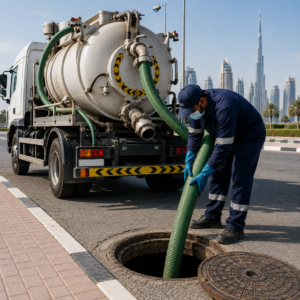
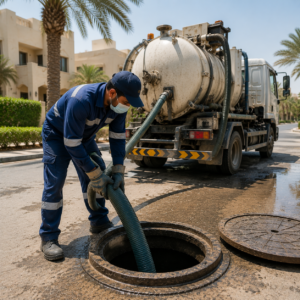
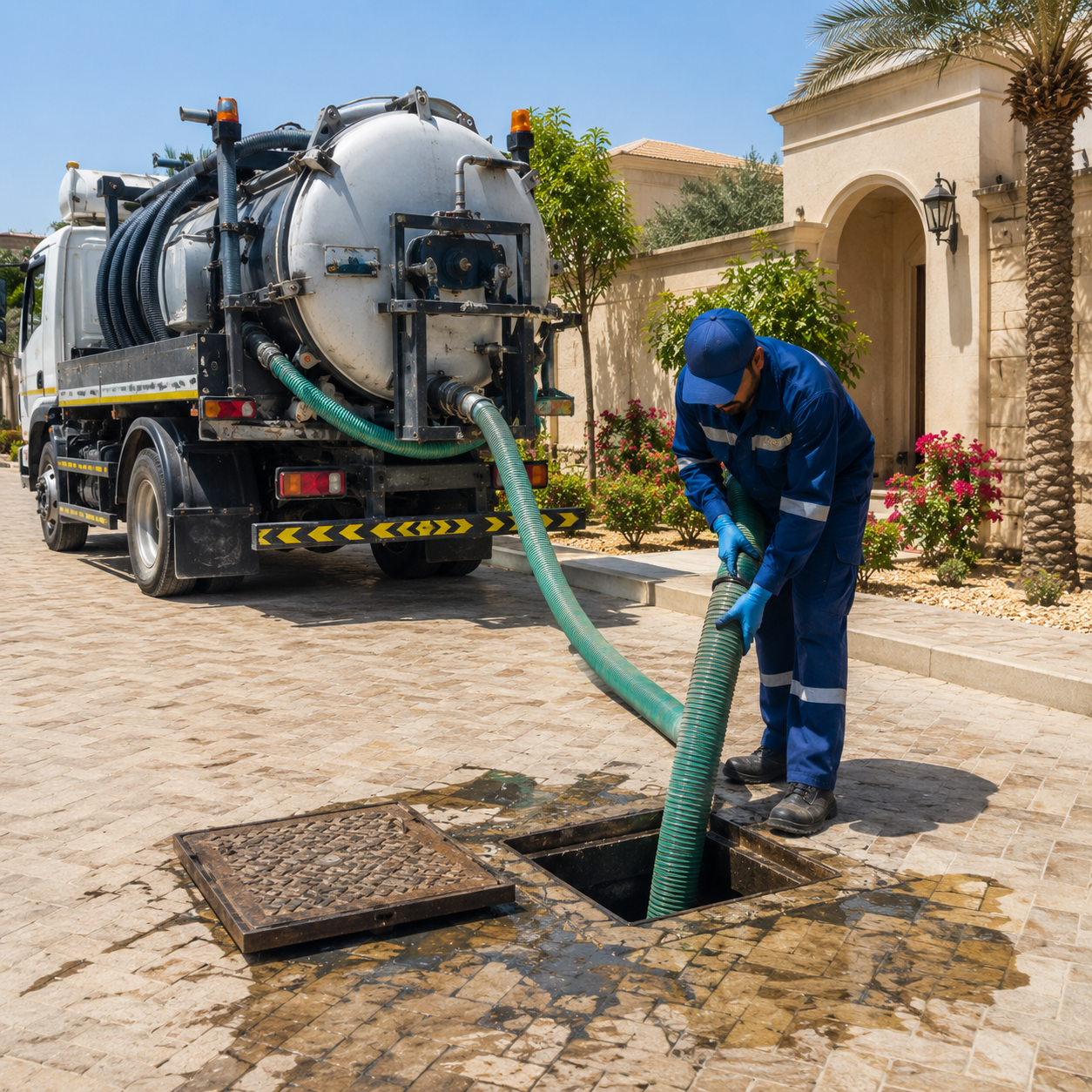
- Setup and access (10–20 minutes): Positioning the vacuum truck, opening the tank access point, and checking waste levels
- Initial extraction (20–40 minutes): Pumping out liquid waste and loose solids
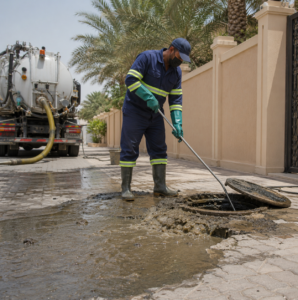
- Breaking up sludge, if needed (30–90 minutes): Using tools to loosen hardened waste along the tank walls and base
- Final extraction and rinse (20–30 minutes): Removing remaining debris and flushing the tank with water
- Inspection and closing (10–15 minutes): Checking for damage, verifying the tank is fully empty, and sealing the access point
Add these up, and a well-maintained tank typically finishes in under 2 hours. A neglected one can easily stretch to 4 or more.
Why the Time Matters More Than People Think
Longer jobs usually mean higher costs, since most cleaning services price partly based on time and labor. A tank that’s cleaned on schedule doesn’t just save you money on the service itself. It also avoids the bigger expense of backups, odor complaints, or emergency call-outs that come with a tank that’s been ignored too long.
I’ve also noticed that rushed jobs, where a technician tries to shortcut the sludge-breaking step to save time, often lead to incomplete cleaning. The tank looks empty on the surface, but hardened waste remains stuck along the walls, which speeds up how quickly the next buildup happens.
Can You Speed Up the Process?
A few things genuinely help:
- Keep the access point clear of furniture, plants, or storage before the technician arrives
- Stick to a regular cleaning schedule instead of waiting until there’s a problem
- Avoid flushing wipes, grease, or heavy solids that harden faster than normal waste
None of these guarantee a fast job on their own, but together they consistently shave time off the visit.
The Bottom Line
Sewage tank cleaning usually takes between 45 minutes and 4 hours, and the biggest factor isn’t the size of the tank, it’s how long it’s been since the last service. Staying on a regular schedule keeps jobs short, costs predictable, and your system running the way it should.
If it’s been a while since your tank was last serviced, or you’re not sure when it was last done, our team at Frontline Cleaning Services can assess it and give you a straight answer on timing and cost before any work begins. Reach out today to get it sorted before a small delay turns into a bigger job.
Frequently Asked Questions
Does sewage tank cleaning smell during the process?
Yes, some odor is normal since the tank is being opened and agitated. Professional crews use equipment designed to contain most of the smell, and it clears quickly once the job is done.
Can I stay home while my sewage tank is being cleaned?
Yes, most homeowners stay home. It’s a good idea to keep windows near the tank closed and avoid the immediate work area until the technician confirms it’s finished.
How often should a villa sewage tank be cleaned to avoid long jobs?
Most villas do well with cleaning every 6 to 12 months, depending on household size and usage. Waiting longer usually means a longer, more involved job later.
Does a bigger tank always mean a longer cleaning time?
Generally yes, but a smaller tank that hasn’t been cleaned in years can sometimes take longer than a large tank that’s on a regular schedule, since buildup matters as much as size.
Is same-day sewage tank cleaning possible in Dubai?
Often, yes. Many providers offer same-day service for standard residential tanks, though heavily neglected tanks or larger commercial properties may need scheduling in advance.