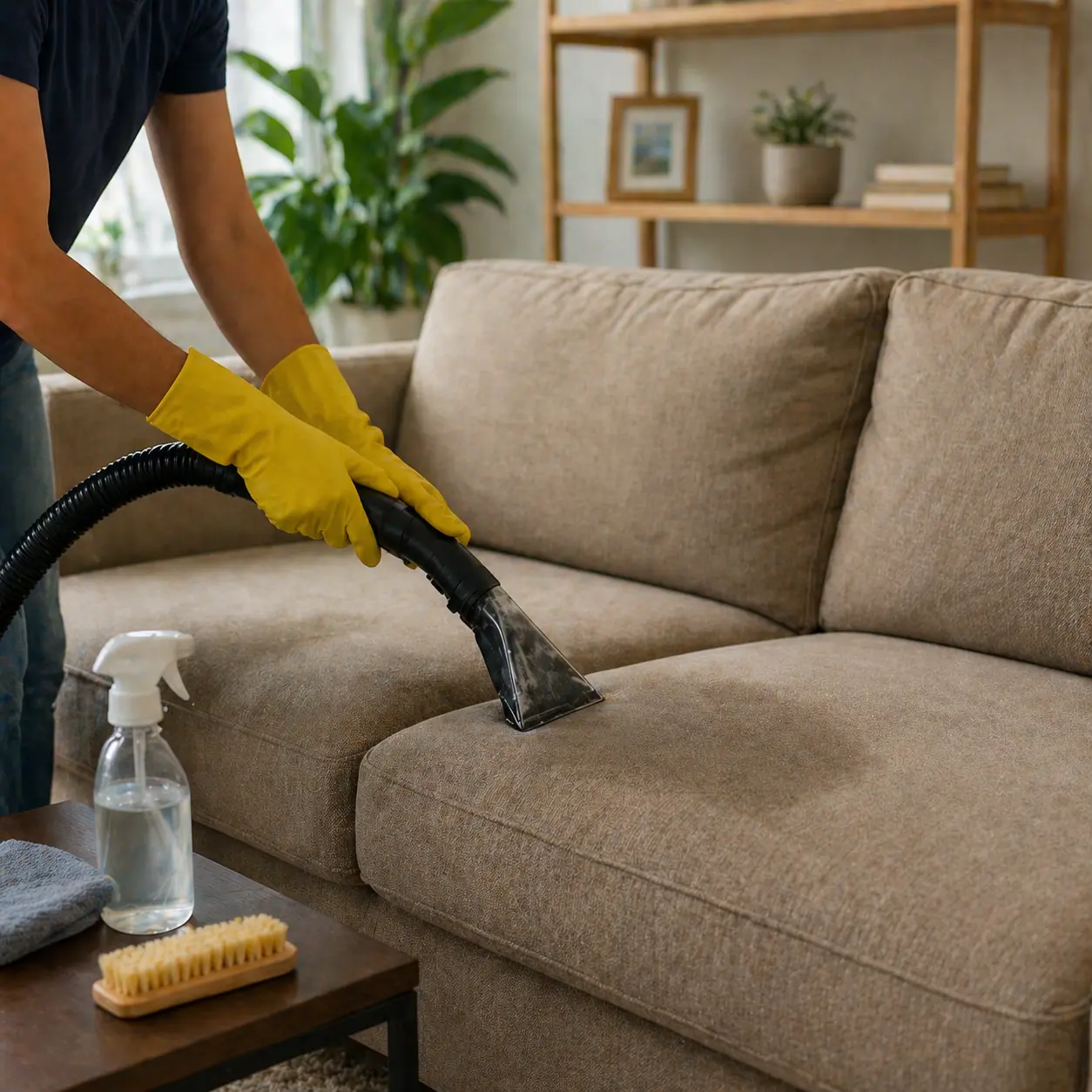
If you’re wondering how to clean a couch that smells, the first step is identifying what’s causing the odour. Unpleasant smells often come from trapped body oils, food spills, pet accidents, or moisture hidden beneath the upholstery—not just surface dirt.
As a Senior Cleaning Supervisor at Frontline Cleaning Services, I’ve deep cleaned hundreds of sofas throughout Dubai over the past 10 years. One thing I’ve consistently found is that masking odours with sprays only provides temporary relief when the real source remains inside the cushions. This guide explains how to remove couch odours effectively and when professional deep cleaning is the better option.
Quick Fixes for Fresh Couches
If your couch has mild odors, these fast methods often work:
Baking Soda Method
Baking soda absorbs odors without chemicals. Sprinkle it generously over the entire couch surface, let it sit 30 minutes (or overnight for stronger smells), then vacuum thoroughly.
This works best for light, fresh odors. For deeper smells trapped in padding, you’ll need stronger methods.
Vinegar Solution
Mix equal parts white vinegar and water in a spray bottle. Lightly mist the fabric don’t soak it. Let it air dry completely.
The vinegar smell disappears as it dries, taking the couch odor with it. This method is safe for most fabrics and costs almost nothing.
Open Air and Sunlight
Sunlight naturally kills odor-causing bacteria. If weather permits, place your couch outside in direct sunlight for 2-3 hours. UV rays eliminate odors at the source.
This works surprisingly well for mild smells but won’t solve deep odor problems.
Deep Cleaning for Stubborn Odors
When quick fixes don’t work, these methods reach deeper into the fabric and padding.
Enzymatic Cleaner Method
Enzymatic cleaners break down the organic compounds causing odors. These products are designed specifically for fabric upholstery.
How to use:
- Vacuum the couch thoroughly first
- Apply enzymatic cleaner per product instructions (usually diluted in water)
- Let it sit 10-15 minutes to break down odor sources
- Blot with clean cloths
- Air dry completely (crucial step)
Incomplete drying traps moisture and recreates the smell. Allow 24-48 hours of drying time.
Baking Soda and Essential Oils
For better results than plain baking soda, mix in essential oils.
Combine 20-30 drops of lavender, lemon, or eucalyptus oil with one cup of baking soda. Let it sit in a sealed container for 48 hours so the scent absorbs. Then apply to your couch.
This treats odors while adding a pleasant fragrance that masks remaining smells.
Odor-Eliminating Spray
Commercial odor eliminators designed for upholstery work by neutralizing odors rather than masking them.
Apply sparingly to affected areas, let dry completely, then assess. Some products require 24 hours to fully work.
Pet Odor Solutions
Pet accidents require special attention. If your couch smells like pet urine or accidents, general methods often fail.
Pet-specific approach:
- Blot any wet spots immediately
- Apply an enzymatic pet odor eliminator (specifically formulated for animal accidents)
- Let it sit 24 hours to break down urine compounds
- Blot and air dry
- Repeat if needed
For dried pet accidents, enzymatic cleaners are your only real solution. They break down uric acid crystals that standard methods can’t touch.
Professional Sofa Cleaning in Dubai services use extraction equipment that removes deep pet odors from padding often the only permanent solution for serious pet accidents.
Preventative Odor Control
Stop smells before they start:
Regular vacuuming – Weekly vacuuming removes dust, pet hair, and food particles that feed bacteria. Use an upholstery attachment.
Fabric protector spray – Creates a barrier that prevents liquids and odors from penetrating fabric. Reapply every 6 months.
Air circulation – Keep your living room well-ventilated. Fans and open windows reduce humidity where odors develop.
Immediate spill cleanup – Blot spills within minutes. Dried spills create lasting odors. Never rub; always blot.
Rotate cushions – Moving cushions distributes wear and odor accumulation evenly.
Odor-eliminating sprays – Quick sprays after heavy use (like after guests visit) prevent odor buildup.
Where Couch Odors Come From
Before cleaning, understand what you’re fighting. Couch smells rarely come from the fabric itself. They come from trapped moisture, bacteria, pet accidents, spills, dust, and sweat that settle deep into the upholstery.
These elements create the perfect environment for odor-causing bacteria to thrive. Surface cleaning doesn’t reach them. This is why your couch still smells after vacuuming.
Common sources:
- Pet accidents or fur buildup
- Spilled drinks absorbed into padding
- Sweat and body oils
- Food particles deep in crevices
- Mold from humidity or moisture
- Smoke or environmental smells
Understanding the root cause helps you choose the right cleaning method.
When to Call Professionals
DIY methods work for fresh or mild smells. For serious odor problems, professional help is more effective.
Contact professionals if:
✓ Odors persist after trying multiple methods
✓ Your couch smells like pet urine and repeated cleaning hasn’t worked
✓ The smell is strong enough to affect your whole room
✓ You’re concerned about mold or moisture deep in the furniture
✓ You want permanent results without guesswork
Front Line Cleaning Services uses commercial extraction equipment and professional-grade products that reach deep into padding where home methods can’t. This approach eliminates odors at the source rather than temporarily masking them.
For deeper guidance on restoration methods, our guide on how to deep clean a sofa covers professional techniques in detail.
Prevention Is Easier Than Cure
The easiest way to handle couch odors is to prevent them. Small habits make a huge difference:
- Don’t eat on the couch (spills trap in padding)
- Remove pet bedding or covers monthly
- Use furniture throws or covers for easy washing
- Keep humidity levels controlled
- Vacuum weekly, not monthly
- Address spills immediately, not later
A couch that smells is usually a couch that’s been neglected for months. Regular maintenance prevents the problem entirely.
For quick fabric cleaning beyond odor removal, our guide on how to clean a fabric sofa quickly covers the full process.
Conclusion
How to clean a couch that smells depends on what’s causing the odor. Light smells respond to baking soda, vinegar, or air drying. Deep smells require enzymatic cleaners, extraction, or professional help.
Start with simple methods. If they don’t work within a week, escalate to stronger solutions. Most couch odors are fixable the key is addressing them before they become permanent.
Your couch should smell fresh. With these methods, it will.
Frequently Asked Questions
- How long does it take to remove couch odors with baking soda?
Baking soda removes light odors in 30 minutes to a few hours. For stronger smells, leave it overnight. Stubborn odors may need repeated applications over several days.
- Is vinegar safe for all couch fabrics?
Vinegar is safe for most fabrics when diluted. Always test on a hidden area first. Avoid using on delicate or vintage fabrics without professional advice.
- Can I use essential oils directly on my couch?
Never apply essential oils directly—they can stain. Mix with baking soda first and let sit 48 hours before applying.
- How do I know if my couch has mold?
Mold smells musty and produces visible discoloration (dark spots or patches). If you suspect mold, address it immediately as it worsens quickly in humid climates like Dubai.
- What’s the best odor eliminator for pet urine?
Enzymatic cleaners specifically formulated for pet urine are most effective. General cleaners don’t break down uric acid crystals that cause the smell.
- How often should I clean my couch to prevent odors?
Vacuum weekly, spot-clean spills immediately, and do a thorough cleaning quarterly. Monthly baking soda treatment keeps odors minimal.
- Can I speed up drying after cleaning?
Use fans, open windows, and run AC to increase airflow. Avoid direct sunlight on colored fabrics. Incomplete drying recreates odors, so patience is essential.
- When should I replace my couch instead of cleaning it?
If odors persist after professional cleaning, or if the couch is over 10 years old with deep damage, replacement may be more cost-effective than repair.