If your sewage tank is overflowing right now, stop using all water and call a professional service immediately. The rest of this guide walks you through exactly what to do next — and what to avoid.
A sewage overflow is not just a mess. It is a health emergency. Raw sewage carries bacteria like E. coli, along with viruses and other germs that can make your family sick. It can also damage your home and property fast. The good news: a calm, correct response in the first hour makes a huge difference.
We handle these call-outs across Dubai every week, so we have seen what works. Below are the seven steps to take, in order, followed by what never to do. For the full service overview, see our guide to sewage tank cleaning in Dubai.
Step 1: Stop Using All Water Immediately
This is the single most important step. Every drop of water you use pushes more waste toward the overflow.
Stop flushing toilets. Turn off taps. Do not run the washing machine, dishwasher, or shower. Tell everyone in the home or building to do the same. Cutting off the inflow gives the tank a chance to settle and keeps the overflow from getting worse while you wait for help.
Step 2: Keep People and Pets Away
Treat the affected area as a hazard zone. Move children, pets, and everyone else away from any sewage — indoors or outdoors.
Some people are at higher risk from exposure, including young children, elderly adults, pregnant women, and anyone with a weak immune system. If you can, rope off or block the area so no one walks through it by accident.
Step 3: Handle Electrical Hazards Safely
Water and electricity are a dangerous mix. If sewage is near power outlets, appliances, or wiring, there is a real risk of electric shock.
If you can reach the main switch without stepping into the water, turn off power to the affected area. If the only way to reach it means walking through the sewage, do not risk it — wait for professionals. Your safety comes first.
Step 4: Do Not Touch the Sewage or Open the Tank
Avoid direct contact with the wastewater. Keep it away from your mouth, eyes, nose, and any cuts. If you must be near it, wear rubber gloves, boots, and eye protection.
Never climb into or lean into a sewage tank. Tanks build up toxic gases like hydrogen sulfide and methane, which can knock a person out in seconds. Opening or entering a tank is never a DIY job — it is genuinely life-threatening.
Step 5: Contain the Spread If It Is Safe
If you can do so safely and without contact, try to stop the sewage from spreading to clean areas. Old towels, rags, or a simple barrier can help hold it back.
Do not push the waste into other drains or out into the street. Just limit the area it reaches. If the spill is large or spreading fast, skip this step and move straight to calling for help.
Step 6: Document the Damage
Before cleanup begins, take clear photos and a short video of the overflow and any damage.
This record helps with insurance claims and gives your service team a head start on understanding the problem. It takes a minute and can save you money later.
Step 7: Call a Licensed Professional Right Away
A sewage overflow is not a wait-and-see situation. Call a licensed, Municipality-approved sewage service as soon as the area is safe.
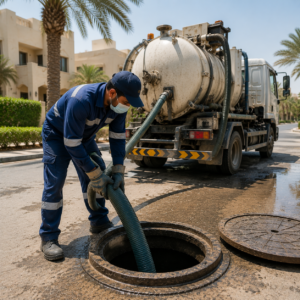
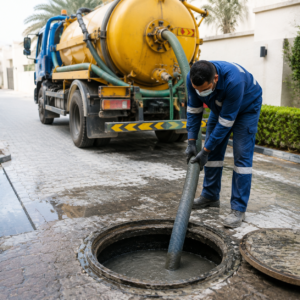
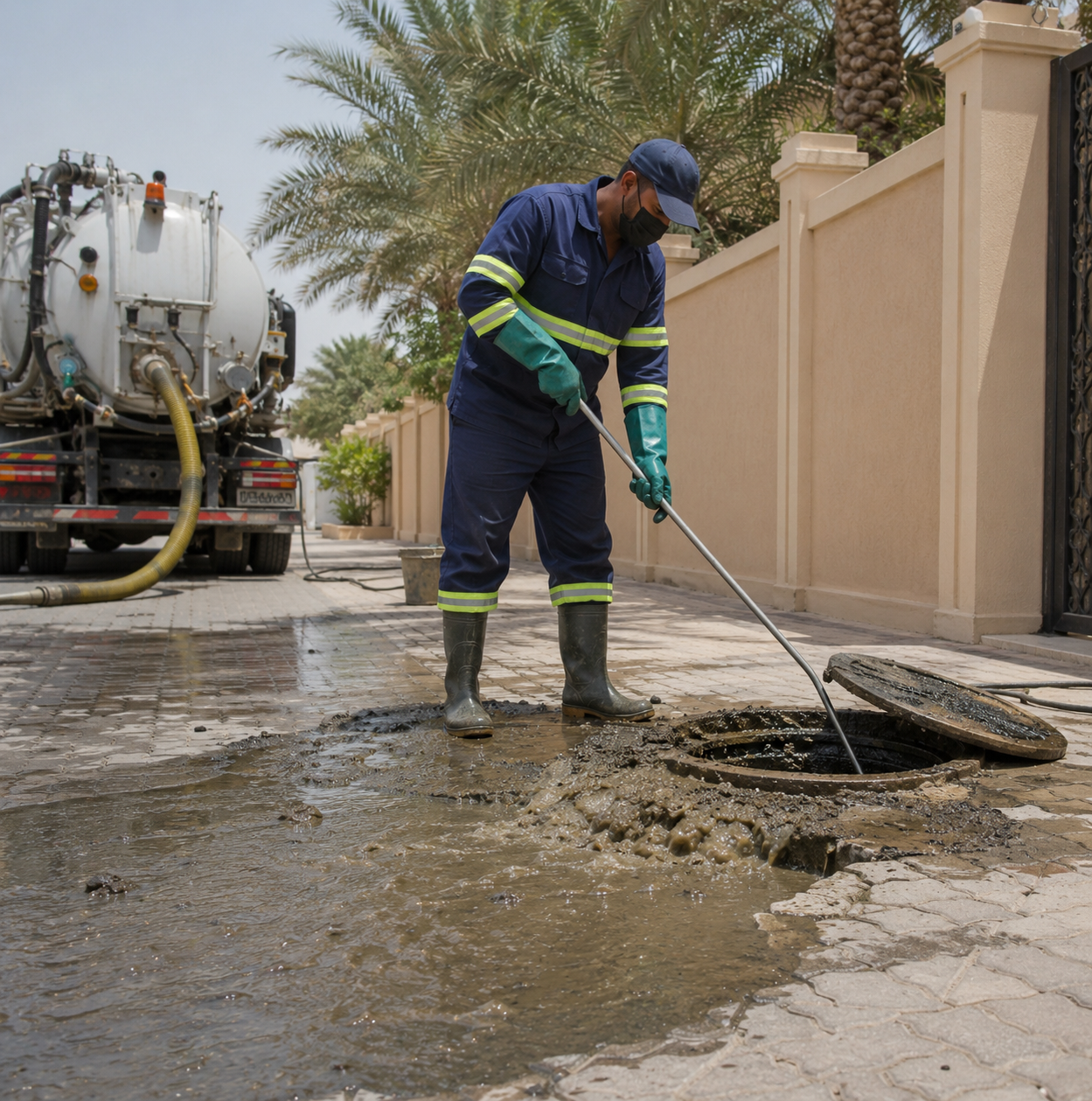
Professionals arrive with vacuum tankers, protective gear, and the training to remove waste, clean the tank, and disinfect the area properly. They also dispose of the waste legally at approved Dubai facilities. The faster they arrive, the less damage you face. When it is an active emergency, treat it as one and call without delay.
What You Should Never Do
Keep this short list in mind during any overflow:
- Do not keep using water. It makes everything worse.
- Do not touch or wade through sewage without protection.
- Do not enter the tank — the gases can be deadly.
- Do not try to pump or repair it yourself. This needs proper equipment.
- Do not pour chemicals down the drain hoping to fix it. They rarely help and can cause harm.
- Do not ignore it. Delay turns a service call into a disaster.
After the Cleanup: Staying Safe
Once professionals have removed the waste, a few careful steps protect your health.
Clean and disinfect all affected surfaces. A simple bleach solution — about one cup of household bleach in ten liters of water — works well for hard surfaces. Wear gloves, boots, and a mask while you do it. Throw away porous items that soaked up sewage, such as rugs or cardboard, since they cannot be fully cleaned. Wash your hands often with soap and water, and do not use your water supply for drinking until you are sure it is safe.
If a sewage smell lingers in your building even after cleanup, do not brush it off — a persistent odor often points to a deeper issue in the system that still needs attention.
Prevent the Next Overflow
The best emergency is the one that never happens. Most overflows are avoidable with simple habits.
Clean your tank on a regular schedule, and more often in summer when heat and water use rise. Watch your water usage, and never flush grease, wipes, or non-biodegradable items. Learning the common sewage tank overflow causes helps you spot risks early and fix them before they become a flood. A little prevention costs far less than an emergency call-out.
The Bottom Line
If a sewage tank overflows, act fast and stay safe: stop all water, keep people and pets away, handle electrical risks, avoid contact, document the damage, and call a licensed professional right away. Never enter the tank or try to fix it yourself. Quick, calm action protects your health and your property.
Dealing with an overflow right now — or want to prevent one? Frontline Cleaning Services provides fast, safe, Municipality-compliant sewage tank cleaning and emergency response across Dubai. Call for emergency service today.
Frequently Asked Questions
What is the first thing to do if my sewage tank overflows?
Stop using all water immediately — no flushing, taps, laundry, or appliances. This stops more waste from adding to the overflow. Then keep everyone away from the area and call a professional service.
Is an overflowing sewage tank dangerous?
Yes. Raw sewage contains harmful bacteria and viruses that can cause illness, and tank gases can be deadly in enclosed spaces. Treat any overflow as a health emergency and avoid direct contact.
Can I clean up a sewage overflow myself?
You can contain a small spill and disinfect hard surfaces afterward with protective gear. But removing the waste, cleaning the tank, and safe disposal must be done by licensed professionals. Never enter the tank.
Who do I call for a sewage overflow in Dubai?
Call a licensed, Municipality-approved sewage tank cleaning service that offers emergency response. They have the equipment, training, and legal disposal access to handle it safely and quickly.
Will my home insurance cover a sewage overflow?
It depends on your policy. That is why you should photograph and document the damage before cleanup. Check your coverage and keep all service records.
How do I stop this from happening again?
Clean your tank on a regular schedule, service it more often in summer, use water carefully, and never flush grease or non-biodegradable items. Address any warning signs early.